

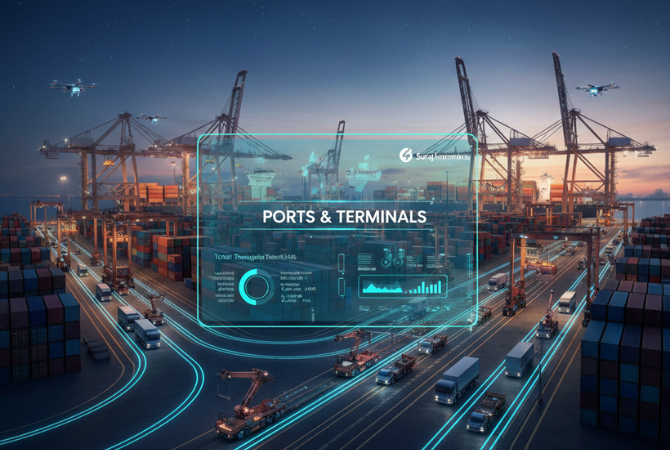

Most ports do not automate everything at once. They start where delays and manual work hurt most, prove the value, then extend step by step. This article sets out a practical port automation roadmap for terminals, from gate and cargo visibility to security, analytics and integration.
Key takeaways
- A phased roadmap lowers risk and lets each step prove its value.
- Gate automation and cargo tracking usually come first because they remove the most manual work.
- Security, access control and analytics build on the same data.
- Integration with the terminal operating system and port community systems ties it together.
Why a phased approach works for ports
Port operations cannot stop while new systems are installed. A phased roadmap keeps the terminal running, spreads the investment and lets staff adapt to one change at a time. Each phase should have clear goals, such as shorter gate times or fewer manual entries, so results can be measured before the next step.
Phase 1: gate automation and cargo visibility

The gate is the most common starting point. OCR cameras read container and truck numbers, RFID identifies vehicles and drivers, and the data goes straight into the terminal system. Cargo tracking with RFID and GPS then shows where containers and vehicles are inside the port.
- Container and number-plate OCR at in-gates and out-gates
- RFID for trucks, drivers and equipment
- Digital gate passes and appointment slots
Phase 2: security and compliance
With identification in place, security systems can use the same data. Access control checks people and vehicles at restricted areas, video surveillance with analytics protects perimeters, and every movement is logged for audits and regulatory checks such as ISPS requirements.
Phase 3: analytics and optimisation

Once data flows from gates, yards and equipment, dashboards and analytics show where time is lost. Port teams can compare vessel schedules with equipment use, spot congestion early and plan resources better. This is also the stage to look at crane OCR and yard planning tools.
Phase 4: integration and scaling
| Phase | Focus | Typical systems |
|---|---|---|
| 1 | Gate and cargo visibility | Gate OCR, RFID, digital gate pass, cargo tracking |
| 2 | Security and compliance | Access control, video surveillance, perimeter protection |
| 3 | Analytics and optimisation | Dashboards, crane OCR, yard planning |
| 4 | Integration and scaling | TOS, ERP and port community system interfaces |
Integration with the terminal operating system, ERP and port community systems removes the remaining manual hand-offs. New berths, gates or terminals can then be added on the same platform. For the modules involved, see port automation software modules and the features port authorities need. Explore our port automation solutions to plan your first phase.
Port automation roadmap: common questions
Where should a port start with automation?
Usually at the gate, with OCR and RFID identification, because it removes manual data entry and shortens truck waiting times quickly.
How long does a port automation programme take?
It depends on the scope. Each phase can be planned and delivered separately, so benefits start before the whole programme is finished.
Does automation replace the terminal operating system?
No. Automation systems feed accurate, real-time data into the TOS and other systems.
Can smaller ports and ICDs follow the same roadmap?
Yes. The same phases apply, scaled to the number of gates, yards and equipment.
Plan your port automation roadmap
Tell us about your terminal, gates and current systems, and we will help you plan the first phase.