Maximizing Operational ROI: The Strategic Value of an Enterprise Fuel Management System (FMS)

Maximizing Operational ROI: The Strategic Value of an Enterprise Fuel Management System (FMS)
In high-throughput industrial logistics, port terminals, and fleet-heavy operations, fuel is more than an operational necessity—it represents one of the largest and most volatile line items on an executive ledger. When managing vast fleets and heavy machinery across multiple shifts, even minor inefficiencies or untracked drops can compound into massive financial losses over time.
Traditional approaches like manual dipstick measurements, paper logs, and unmonitored dispensing lines simply cannot deliver the real-time precision required by modern supply chains. To protect profit margins and guarantee complete chain-of-custody oversight, forward-thinking enterprises are transitioning to an automated fuel management system (FMS).
The Operational Risk of Manual Fuel Tracking
Historically, monitoring bulk fuel storage tanks and dispensing activity relied on fragmented, human-driven data collection. This approach introduces critical operational vulnerabilities:
-
Data Discrepancies: Manual entry logs are inherently prone to human error, delays, and lost paper trails.
-
Unmonitored Losses: Static storage tanks without real-time telemetry leave facilities exposed to undetected siphoning, fuel theft, and unrecorded dispensations.
-
Inaccurate Accounting: Disconnects between pump usage and central accounting make it nearly impossible to calculate exact per-vehicle cost efficiency.
Deploying a digitized diesel management system eliminates these blind spots. By automating data capture directly at the pump and storage level, companies gain a transparent, tamper-proof record of every liter that enters or leaves their facilities.
How IoT-Driven Fuel Monitoring Systems Work
Modern fuel monitoring systems unify specialized hardware components with cloud-based software to deliver real-time asset intelligence:
-
Precision Sensing & Telemetry: Capacitive level sensors and high-accuracy flow meters continually track fuel volume changes inside bulk storage tanks and mobile tankers.
-
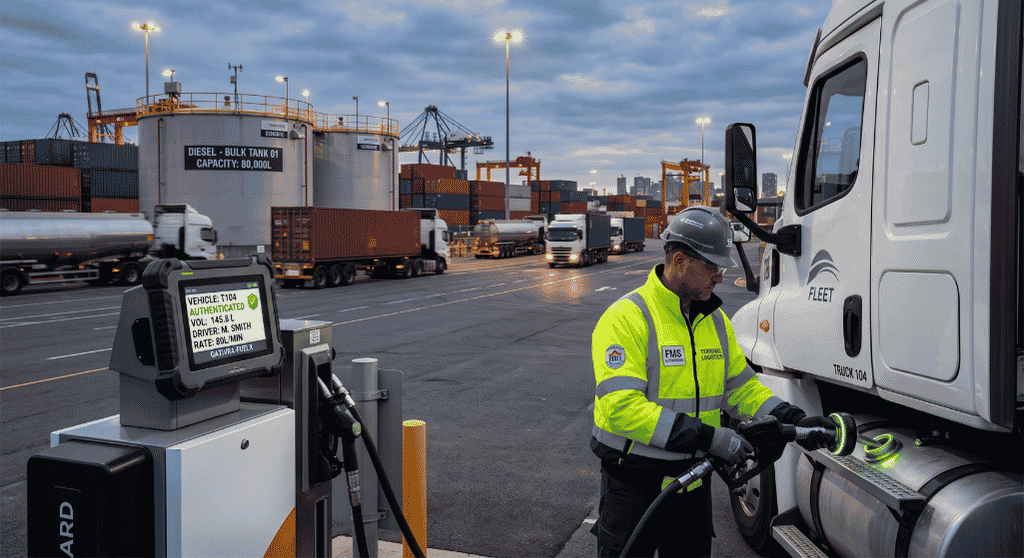
Automated RFID Dispensing: Smart RFID nozzle readers identify incoming assets before fuel can flow. Dispensing cuts off instantly if an unauthorized vehicle attempts to refuel or if the nozzle is detached from the fill neck.
-
Automated Data Syncing: Transactional metrics—such as precise timestamp, machine ID, operator badge details, and total volume—are instantly transmitted across secure networks to central dashboards.
Optimizing Fleet Performance: Fuel Management System for Trucks
Managing commercial transportation fleets requires combining fuel metrics with real-time vehicle performance diagnostics. Implementing a dedicated fuel management system for trucks gives fleet operators the tools to control fuel burn across all transit corridors.
By pairing an automated fuel tracking system with vehicle telemetry (CAN-bus data), logistics managers can evaluate exact fuel burn alongside odometer readings and engine hours. This visibility makes it easy to spot red flags like excessive engine idling, aggressive driving habits, or underlying mechanical defects that elevate fuel consumption. Armed with this data, teams can optimize route planning, improve driver behavior, and lower overall operational expenses.
Core Advantages of Modern Fuel Management Solutions
Investing in enterprise-grade fuel management solutions delivers immediate returns across safety, compliance, and profitability:
1. Zero-Tolerance Fuel Theft Prevention
Subtle siphoning during off-hours can easily slip past manual checks. Intelligent software tracks live inventory curves, triggering instant security alerts if fuel levels drop unexpectedly while a machine or tank is idle.
2. Uninterrupted Supply Chain Continuity
Running out of fuel mid-shift stalls operations and disrupts delivery schedules. Real-time monitoring provides automated low-level alerts, enabling purchasing teams to schedule timely bulk refills before inventory reaches critical thresholds.
3. Direct Integration with Enterprise ERPs
Automated fuel management software seamlessly syncs with leading platforms like SAP, Oracle, and custom ERPs via API. This automates fuel accounting, eliminates end-of-month manual reconciliation, and ensures flawless audit readiness.
Why Partner with Suraj Informatics?
Executing a multi-site fuel automation strategy requires industrial-grade hardware, robust software integration, and proven domain expertise. At Suraj Informatics, we specialize in end-to-end yard, terminal, and industrial automation.
Our enterprise platform, Gativra-FuelX, combines ruggedized field sensors, automated pump controllers, and high-level analytics designed to transform resource management into a long-term competitive advantage for your enterprise.
Conclusion: Take Control of Your Enterprise Fuel Operations
In today’s competitive market, allowing unmonitored fuel usage is a risk no enterprise can afford. Moving to an automated fuel management system protects your operational bottom line, enhances asset security, and streamlines your entire supply chain infrastructure.
Ready to modernize your fuel infrastructure? Contact our engineering team today at sales@surajinformatics.com or visit Suraj Informatics to schedule a custom demonstration.