TAT in Logistics: What Truck Turnaround Time Means and How to Cut It

Ask any plant logistics manager what keeps them up at night and the answer is often the same: trucks queuing outside the gate. Every hour a vehicle spends waiting is an hour of detention charges, an unhappy transporter and a delayed shipment. The number that captures all of this is TAT, or turnaround time. This guide explains what TAT in logistics means, how to measure it and how to bring it down.
Key takeaways
- TAT (turnaround time) in logistics is the total time a truck spends at your site, from arrival at the gate to exit.
- Most of that time is not loading. It is waiting: at the gate, at the weighbridge, in the parking area and at the dock.
- You cannot reduce TAT until you measure each stage separately with accurate time stamps.
- Automating the gate, the weighbridge and yard scheduling removes the manual hand-offs where most delays start.
- Suraj Informatics reports around a 40% reduction in vehicle turnaround time with its GATIVRA platform.
What does TAT mean in logistics?
TAT in logistics stands for turnaround time. In plant and warehouse operations it usually means truck turnaround time: the time between a vehicle reporting at your gate and the same vehicle leaving your premises, loaded or unloaded, with all its paperwork complete.
The term is used in other places too. Ports talk about vessel turnaround time, and customer service teams talk about order TAT. But for manufacturers, warehouses, cement and steel plants, and logistics parks, truck TAT is the figure that most directly affects cost, capacity and transporter relationships.
How to calculate truck turnaround time
The basic formula is simple:
Truck TAT = Gate-out time − Reporting time at the gate. Average TAT = the sum of all truck TATs in a period ÷ the number of trucks.
The key word is reporting time, not gate-in time. If a truck waits two hours on the road before it is allowed through the gate, those two hours are part of its turnaround, even if your registers never show them.
To find out where time is lost, break TAT into stages and record a time stamp for each one:
- Reporting and queue. The truck arrives and waits outside the gate or in a holding area.
- Gate entry. Documents, driver details and safety checks are verified and the vehicle is allowed in.
- First weighment. The truck is weighed (tare for loading, gross for unloading).
- Yard wait. The truck parks until a loading or unloading bay is free.
- Loading or unloading. The actual work at the dock.
- Second weighment. The truck is weighed again to calculate the net weight.
- Invoice and gate exit. Documents are issued and the vehicle leaves.
Here is an illustrative example of how a four-hour turnaround can break down at a site that still works manually:
| Stage | Time taken | Value-adding? |
|---|---|---|
| Queue outside the gate | 60 min | No |
| Gate entry and document check | 20 min | No |
| First weighment, including queue | 20 min | No |
| Waiting in the yard for a bay | 60 min | No |
| Loading at the dock | 45 min | Yes |
| Second weighment, including queue | 15 min | No |
| Invoicing and gate exit | 20 min | No |
| Total TAT | 240 min | Under 20% is loading |
The numbers will be different at your site, but the pattern is usually the same: the dock work is a small share of the total, and waiting makes up the rest.
Why high TAT costs more than you think
Detention and freight costs
Transporters price long waits into their rates or charge detention. Sites known for slow turnaround often find it harder to get vehicles at short notice.
Lost capacity
Your docks, weighbridges and staff can only handle so many trucks a shift. If each truck stays twice as long as it needs to, you are effectively running at half your real capacity.
Congestion and safety risk
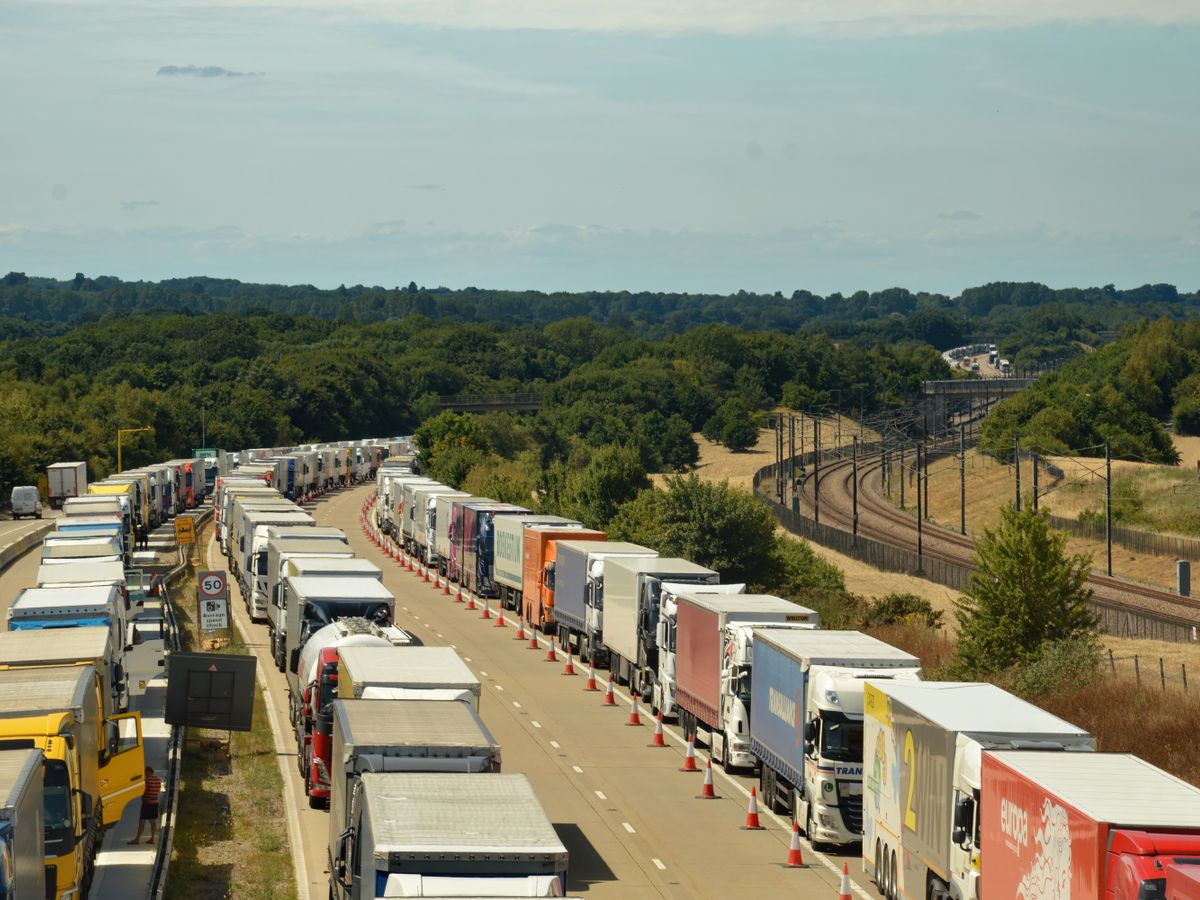
Queues spill onto public roads and crowd the yard, which raises the risk of accidents and complaints from neighbours and authorities.
Poor data and disputes
When times and weights are written by hand, it becomes hard to prove when a truck arrived or what it carried. That leads to disputes over detention, shortages and invoices.
7 ways to reduce truck turnaround time
1. Measure every stage automatically
Start by capturing time stamps without manual entry. RFID readers and ANPR cameras at the gate, the weighbridge and the docks record each event as it happens, so you can see exactly which stage is causing the delay.
2. Schedule arrivals with slot booking
Give transporters a time slot instead of letting every truck arrive at 9 a.m. Spreading arrivals across the day shortens the queue at the gate without adding any infrastructure.
3. Digitise the gate pass
A digital gate pass, created in advance and linked to the purchase or sales order, lets the gate team verify a truck in seconds instead of checking paper documents. Gate automation with boom barriers can then let pre-approved vehicles in without stopping for long.
4. Automate the weighbridge
Weighing twice per truck makes the weighbridge a natural bottleneck. An unmanned weighbridge system identifies the vehicle, captures the weight and issues the ticket without an operator, 24×7. Read more in our guide: What is weighbridge software?
5. Call trucks to the dock only when the bay is free
A yard management system keeps trucks in an organised queue and calls each one to a specific bay when it is ready, by display screen or SMS. This cuts yard waiting time and stops drivers from crowding the docks.
6. Connect everything to the ERP
When gate, weighbridge and dock data flow directly to the ERP, invoices and exit documents can be ready the moment loading ends. The truck does not wait at the exit while someone re-enters the weights.
7. Review TAT every day
Put TAT on a live dashboard, broken down by stage, shift, product and transporter. Small daily improvements add up quickly once everyone can see the same numbers.
Find out where your trucks lose time
Book a walkthrough of GATIVRA and see how gate, weighbridge and yard automation work together at your site.
Manual vs automated plant logistics
| Stage | Manual process | With GATIVRA automation |
|---|---|---|
| Arrival | Trucks arrive at the same time and queue on the road | Slot-based arrivals and a managed holding area |
| Gate entry | Paper documents checked by hand | Digital gate pass, RFID or ANPR identification, boom barriers |
| Weighbridge | Operator types the vehicle number and weight | Unmanned weighing with automatic tickets |
| Yard and docks | Drivers are called by phone or loudspeaker | Queue management with automatic bay calling |
| Exit | Invoice prepared after loading, truck waits | ERP integration, documents ready at the end of loading |
| Reporting | End-of-day registers, no stage-wise data | Live stage-wise TAT dashboard |
How GATIVRA helps you cut TAT
GATIVRA is the plant logistics platform from Suraj Informatics. Its Yard and Logistics Execution module automates the full journey from gate-in to gate-out: vehicle validation and safety checks at entry, RFID and machine-vision tracking inside the plant, automated weighbridges linked to invoicing, and loading and yard movements managed from one screen.
Because every event is time-stamped automatically, GATIVRA also shows you your real TAT, stage by stage, and where it is improving. Suraj Informatics reports that sites using the platform see around a 40% reduction in vehicle turnaround time.
Frequently asked questions
What is the full form of TAT in logistics?
TAT stands for turnaround time. In plant and warehouse logistics it usually refers to truck turnaround time: the total time a vehicle spends at the site, from reporting at the gate to exit.
How do you calculate truck turnaround time?
Subtract the time the truck reported at the gate from the time it left. To find the causes of delay, record time stamps for each stage: queue, gate entry, weighments, yard wait, loading or unloading, and exit.
What is a good truck turnaround time?
It depends on the product, the loading method and the site layout, so there is no single benchmark. The best approach is to measure your current TAT by stage, then cut the waiting stages, which usually make up most of the total.
Which technologies reduce TAT the most?
Digital gate passes, RFID and ANPR vehicle identification, unmanned weighbridges, yard queue management and ERP integration. Together they remove manual checks and data entry at every stage.
Talk to our automation team
Tell us about your daily truck volumes and current turnaround time, and we will show you where GATIVRA can save hours.