



A warehouse control system (WCS) is the real-time layer that directs equipment on the warehouse floor. It takes work from the warehouse management system and makes sure conveyors, sorters and scanners carry it out in the right order. This guide explains how a WCS works and where it differs from a WMS.
Key takeaways
- A WCS controls equipment in real time, while a WMS plans work and manages inventory.
- The WCS receives orders from the WMS and releases them at a pace the equipment can handle.
- It gives operators screens and instructions and sends status back to the host.
- A WCS is useful where several kinds of material handling equipment must work together.
What a warehouse control system does
Think of the WCS as the traffic controller for the floor. It tells each piece of equipment what to do next, reads scans to confirm what is moving and reacts when something changes. It also collects equipment data so maintenance teams can see how the system is performing.
WCS versus WMS: who plans and who executes
The WMS decides what should happen: which orders to release, where stock is and which wave to run. The WCS decides how it happens on the equipment: which lane, which sorter chute and which moment. The WMS can wait for a response, while the WCS must answer in fractions of a second. See our guide to the types of warehouse management systems for the planning side.
| Layer | Main job |
|---|---|
| WMS | Inventory, orders, waves, putaway and planning |
| WCS | Real-time control of conveyors, sorters and scanners |
| Equipment controllers | Motor and sensor level control |
How a WCS handles an order, step by step
The same pattern repeats for every order. The warehouse management system workflow from receiving to shipping shows the planning view of the process.
- The WMS sends released work to the WCS.
- The WCS releases orders in amounts the equipment can handle.
- Scanners read each carton and the WCS looks up its route.
- Conveyors and sorters are told where to send each item.
- Completion and exceptions are reported back to the WMS.
Equipment and screens a WCS connects
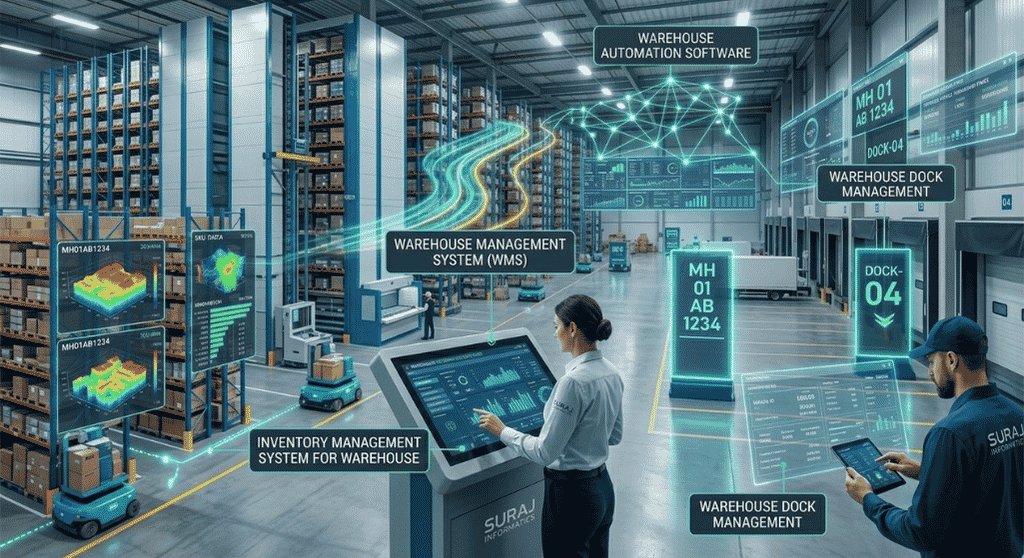
A WCS commonly talks to conveyors, sorters, barcode scanners, label printers, scales and pick-to-light displays. Operator screens show queues, jams and counts, so a supervisor can react quickly. Because it works with equipment from different suppliers, the WCS lets you add or replace a device without rebuilding the host system.
When a site needs a WCS
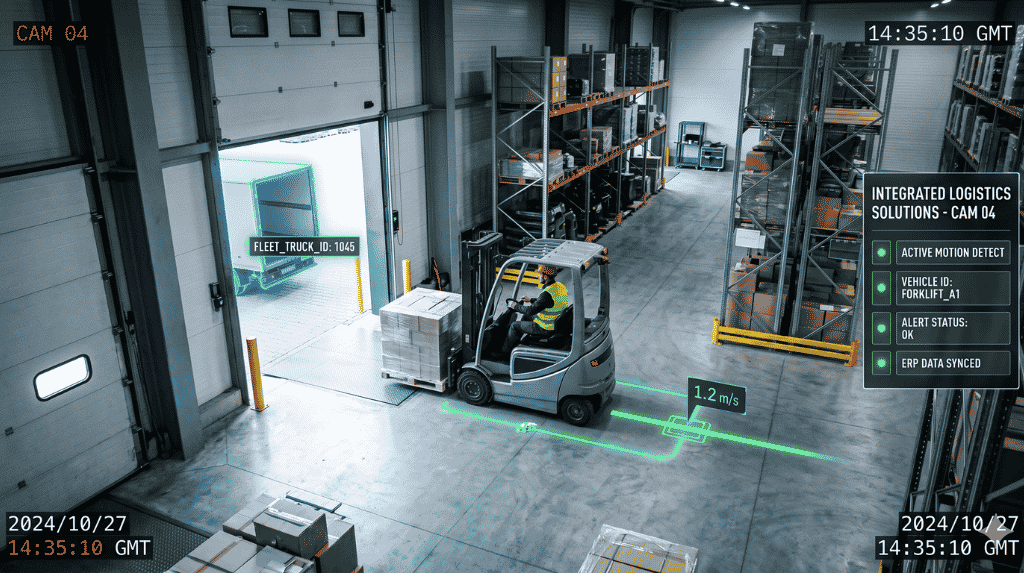
A small manual warehouse can run on a WMS alone. A WCS becomes valuable when several automated devices must share a flow, when throughput peaks cause bottlenecks, or when exceptions such as unreadable labels need quick handling. List your equipment and your busiest hour before deciding.
Planning warehouse control with Suraj Informatics
Suraj Informatics provides warehouse management and control software with scanners, mobile devices and integrations. Share your layout and equipment, and we will outline where a control layer helps.
Warehouse control system: common questions
What is a warehouse control system?
It is software that directs warehouse equipment in real time, based on work received from a warehouse management system.
Is a WCS the same as a WMS?
No. A WMS plans orders and inventory, and a WCS runs the equipment that carries out those orders.
Can a WCS work with equipment from different suppliers?
Yes. It provides one interface to equipment from several makers.
Do I need both a WMS and a WCS?
Many automated sites do. Smaller manual sites may need only a WMS.
Talk to our warehouse software team
Tell us about your warehouse flow and equipment, and we will suggest the right control approach.