


A weighbridge automation system turns a truck’s two weights into one trusted net weight. It identifies the vehicle, confirms it is correctly on the platform, captures gross and tare weight and records the result without hand entry. This guide explains the weighing logic that sits behind every ticket.
Key takeaways
- Net weight is gross weight minus tare weight, so both readings must be right.
- Automation identifies the vehicle first, then links each weight to that vehicle and order.
- A stored tare can remove the second trip to the weighbridge for regular vehicles.
- Weighbridges used for trade need Legal Metrology verification and regular re-calibration.
Gross, tare and net weight in plain terms
Gross weight is the loaded truck on the platform. Tare weight is the same truck empty. Net weight is the material alone, worked out as gross minus tare. Every payment, stock entry and delivery note depends on this one subtraction, so errors in either reading flow straight into the books.
First weighing and second weighing
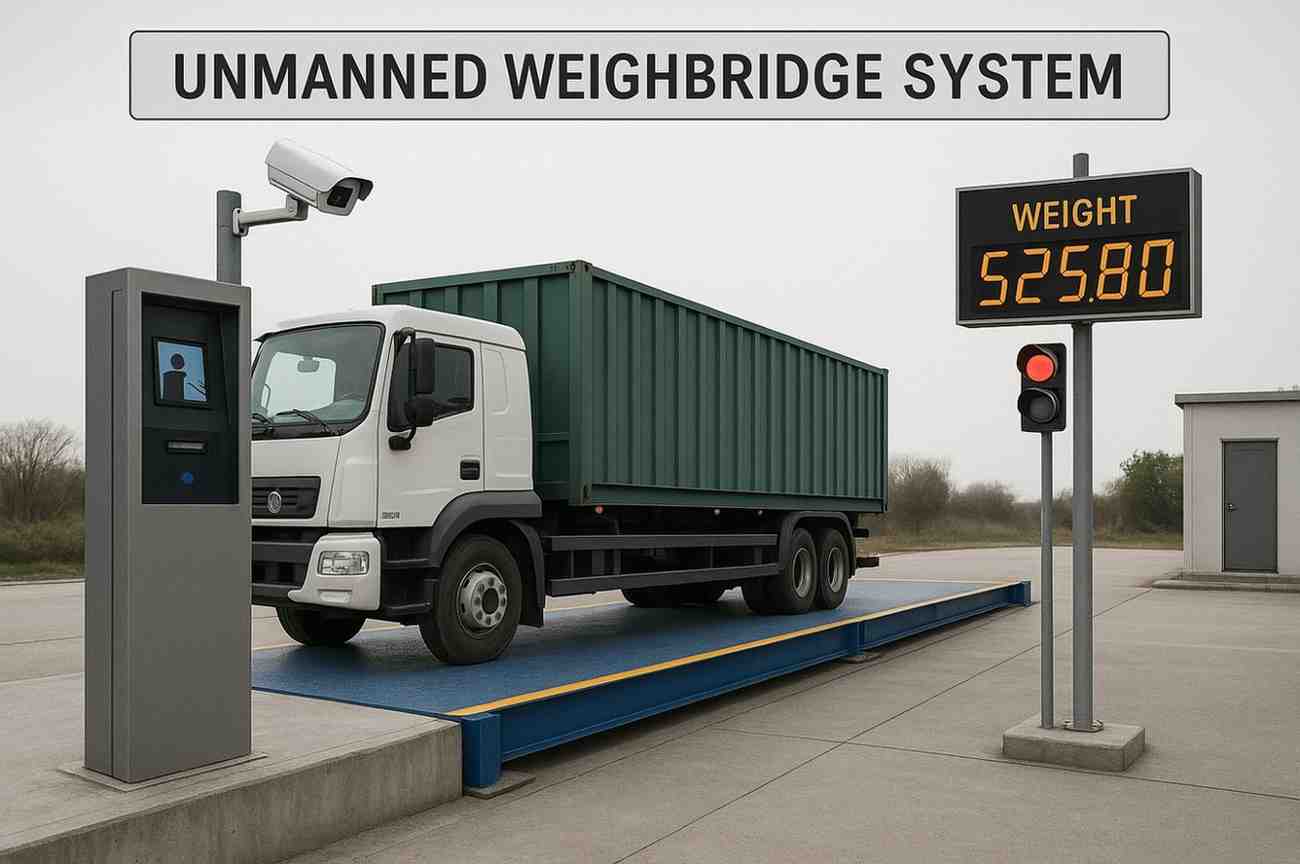
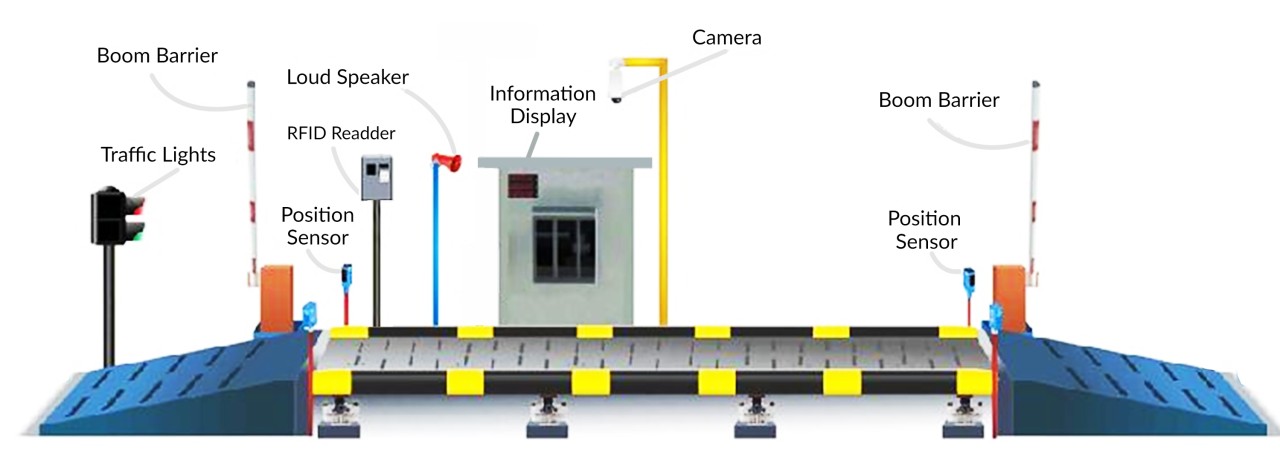
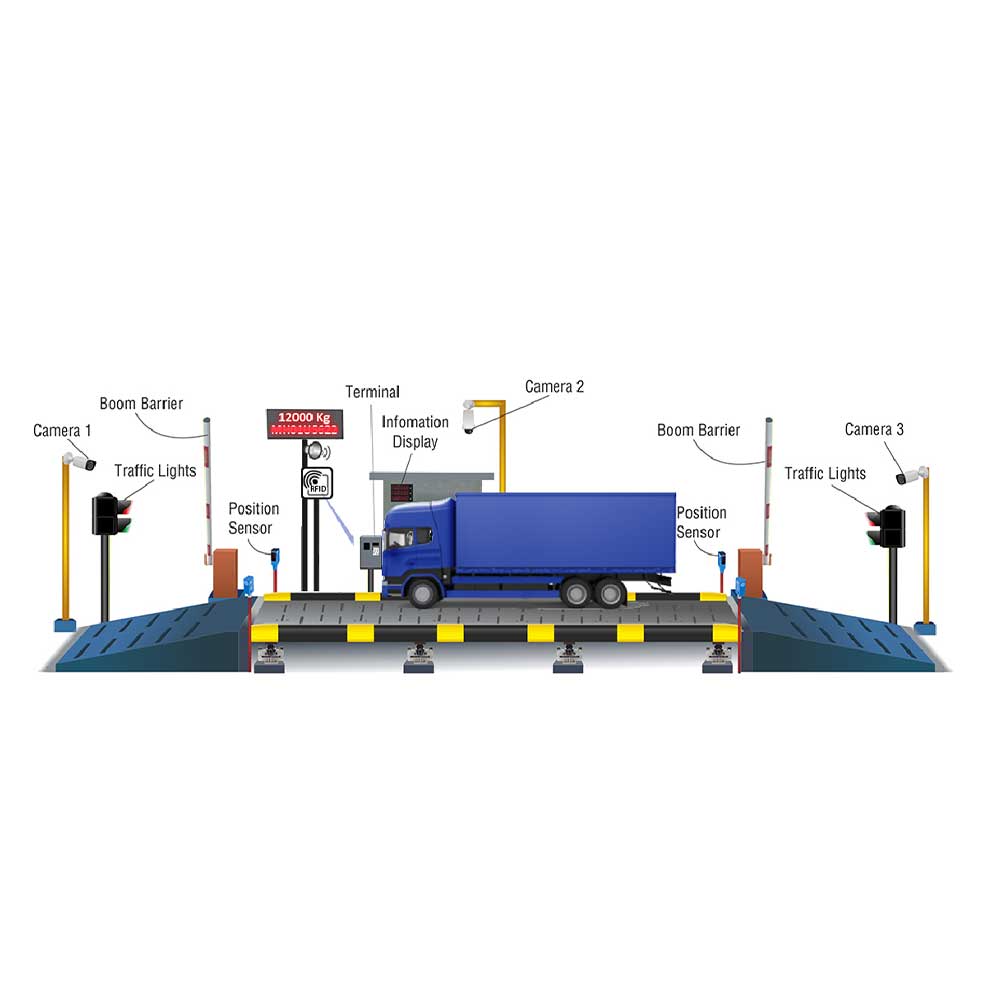
For an inbound load, the truck is weighed full at the gate and empty after unloading. For an outbound load, the order is reversed. An RFID reader identifies the vehicle on arrival, a position sensor confirms it is fully on the deck, and the controller captures the reading once the weight is stable. The driver follows traffic lights and a display and never leaves the cab. See how an unmanned weighbridge works step by step for the full sequence.
- RFID tag or number plate identifies the vehicle and its order.
- The boom barrier opens and the driver is guided onto the platform.
- The position sensor confirms the truck is correctly placed.
- The controller waits for a stable reading and stores the first weight.
- The second weight is captured on the return trip and the net is calculated.
Stored tare: when it saves a trip
Vehicles that visit often can have a tare weight saved against their record. The system then needs only one weighing per visit. Stored tare must be refreshed on a schedule, because fuel, tools, tyres and body repairs change an empty truck’s weight over time. Many sites set a rule that forces a fresh tare weighing after a fixed period or when the stored figure looks out of range.
What the automatic ticket records
The ticket links the weights to the vehicle, the driver, the material and the order. It carries the date and time of each reading and can hold a camera snapshot for each weighing. Because the data goes to your ERP automatically, nobody retypes figures. Read about connecting weighbridges to SAP and other ERP systems for how the hand-off is arranged.
Calibration and Legal Metrology verification
The logic is only as good as the scale beneath it. Weighbridges used for trade must be verified and stamped under Legal Metrology rules and re-verified at the intervals those rules require. Check the current requirements with your Legal Metrology office. Keep the calibration certificate with your records, and treat a failed test-weight check as a reason to stop weighing until the scale is corrected.
Planning gross-tare weighing with Suraj Informatics
Suraj Informatics designs unmanned weighbridge systems with RFID, position sensors, cameras and ERP links. Tell us how your trucks are weighed today and we will map the first-weight, second-weight and stored-tare rules for your site.
Gross, tare and net weight: common questions
What is the difference between gross, tare and net weight?
Gross is the loaded truck, tare is the empty truck and net is the material, found by subtracting tare from gross.
Do I need two weighings every time?
Not always. A stored tare for a regular vehicle can replace the second weighing, if you refresh it on a schedule.
Can the system work without an operator?
Yes. Identification, positioning, weight capture and ticket printing run automatically, with exceptions raised to staff.
Does automation replace calibration?
No. The weighbridge still needs Legal Metrology verification and regular re-calibration.
Talk to our weighbridge team
Tell us about your weighing process and we will suggest the right automation setup.