



A weighbridge sits on the critical path of a plant: when it stops, trucks queue and dispatch stops. An automated weighbridge has more devices than a manual one, such as readers, sensors, barriers and displays, so planning for failure matters. This guide explains how redundancy and offline capture keep weights recorded when something goes wrong, and what to ask a supplier.
Key takeaways
- Automation adds devices, so each one needs a plan for failure.
- Redundancy means a backup path for the weight, the identity and the power.
- Weights must be stored locally so that a network outage does not lose records.
- Test failure scenarios before go-live, not after.
Why redundancy matters on a weighbridge
Inaccurate or missing weighments can cause material loss, and a stopped weighbridge can hold up the whole site. The system should keep capturing weights even if a device fails. That is the role of built-in redundancy.
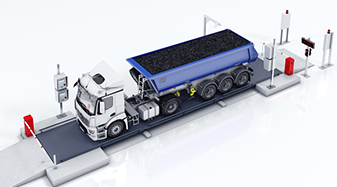
Common points of failure in an automated lane
| Device | If it fails | Typical backup |
|---|---|---|
| RFID reader | Vehicle not identified | Second reader or manual lookup of the vehicle |
| Position sensor | Truck position unknown | Second sensor or operator check |
| Indicator or load cell signal | Weight not read | Backup indicator or manual capture with approval |
| Network link | Data not sent to the server | Local storage and later upload |
| Power supply | Whole lane stops | UPS for critical devices |
Keeping weights when the network drops
The lane controller should store each weighment locally with the vehicle, time and image, then send it to the server when the link returns. This way a network fault does not mean lost records. Check how long the local store can hold data and how duplicates are avoided when it uploads.

A controlled manual fallback
A fallback procedure keeps trucks moving, but it must be controlled. Require a supervisor approval, record the reason and mark the weighment as manual so it can be reviewed later. Without these steps, a fallback can become a loophole. See unmanned weighbridge remote monitoring for how teams watch many lanes at once.
How to test failure before go-live
- Unplug a reader and confirm the system flags it and uses the backup.
- Cut the network and confirm weighments are stored and uploaded later.
- Switch off the mains and confirm the UPS carries the critical devices.
- Record the results and repeat the test after any change.
Reliable weighbridge integration from Suraj Informatics
Suraj Informatics integrates unmanned weighbridge systems with sensors, RFID, barriers and software for industrial sites. Our guide to unmanned weighbridge components lists the parts of a typical lane.
Calibration note: automation does not replace legal metrology. The weighbridge, load cells and indicator must still be calibrated, stamped and verified at the intervals required by the Legal Metrology authorities, and after any repair or relocation.
Weighbridge redundancy: common questions
What does redundancy mean for a weighbridge?
It means a backup for each critical step, such as a second reader, local data storage and a power backup, so that one failure does not stop weighing.
What happens if the network goes down?
A good lane controller stores the weighment locally and uploads it when the network returns, so no record is lost.
Is manual weighing allowed as a fallback?
It can be, if it is controlled: supervisor approval, a recorded reason and a flag so the weighment can be reviewed.
Does redundancy affect calibration?
No. The weighbridge still needs regular calibration and verification under Legal Metrology rules.
Talk to our weighbridge team
Tell us about your weighbridge and vehicle types, and we will suggest the right sensors and guidance devices.