


Intermodal trains carry containers between ports, inland depots and industrial hubs, and every container has to be matched to the right wagon and booking. Rail OCR makes this automatic. This guide explains how rail OCR supports intermodal operations, how train data is matched with the loading list, and what the system records at each passage.
Key takeaways
- Intermodal rail is growing because it lowers transport costs and environmental impact.
- Rail OCR portals record every train passage with cameras and readers.
- The camera data is matched with the departing terminal’s list of trains and containers.
- The result is the exact position of every container on every identified wagon.
Why intermodal rail needs OCR
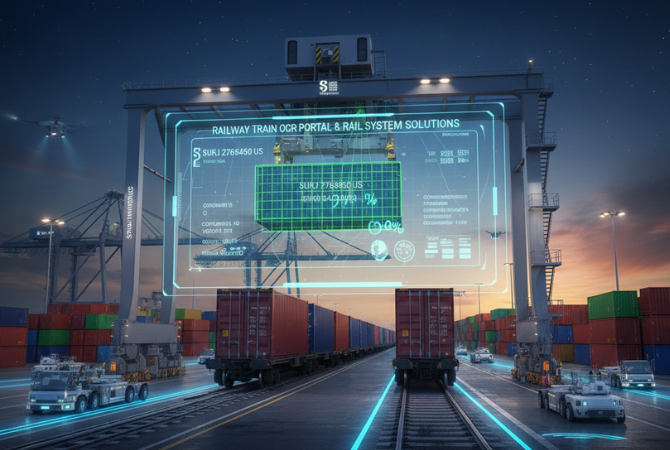
Intermodal train operations are now a key part of global supply chains. Shipping lines and their partners use rail to lower costs for customers and reduce the environmental impact of freight, using tracking technology first adopted by many European and North American railways. Rail OCR brings the same automated identification to ports and inland terminals.
How train data is matched
- Loading list. The departing rail terminal sends a list of loaded trains and containers in advance.
- Train passage. Cameras and trackside readers capture the train as it passes the portal.
- Matching. The captured data is matched with the list, linking a train number to a specific passage.
- Position. The exact position of each container on each identified railcar is returned.
- Verification. Saved images are used to correct any read or input issues before data is released.
Technology used at the portal

| Technology | Role |
|---|---|
| Trackside AEI readers | Read automatic equipment identification tags on wagons |
| High-resolution CCTV cameras | Capture wagon and container markings |
| Train OCR software | Reads numbers and codes and links them to the train |
| Image archive | Stores pictures for checks, claims and audits |
Benefits for intermodal operators
- Fast, accurate tracking of containerised freight by rail.
- Lower operating costs through proven automation.
- Secure records of every passage.
- Better planning at the receiving terminal.
For a full introduction to the technology, read how rail OCR portals work.
Intermodal rail OCR from Suraj Informatics
Suraj Informatics provides the railway train OCR portal for intermodal terminals, ports and ICDs, using proven automated methods to increase productivity and lower operating costs.
Intermodal rail OCR: common questions
What is intermodal rail OCR?
It is the use of rail OCR portals to identify and track containers moving by train between ports, depots and terminals.
What is an AEI reader?
An automatic equipment identification reader placed beside the track that reads ID tags fitted to rail wagons.
How is a train matched to its containers?
The data captured by the portal is compared with the loading list from the departing terminal.
What happens if a number cannot be read?
Saved images are reviewed so the record can be corrected before it is sent to the system.
Talk to our rail automation team
Tell us about your intermodal traffic and terminals, and we will suggest the right rail OCR setup.