


Rail OCR (optical character recognition for trains) reads wagon numbers, container codes and other markings automatically as a train passes through a camera portal. It replaces manual checks at rail yards, ports and inland container depots, and keeps rail data accurate and up to date. This guide explains how rail OCR works, what it captures, its benefits and where it is used.
Key takeaways
- Rail OCR uses camera portals beside the track to read wagon and container markings.
- Machine-learning recognition handles different fonts, dirt, damage and lighting.
- Data is sent to the terminal, rail or ERP system without manual entry.
- It speeds up train processing at ports, ICDs, rail yards and plant sidings.
How rail OCR works

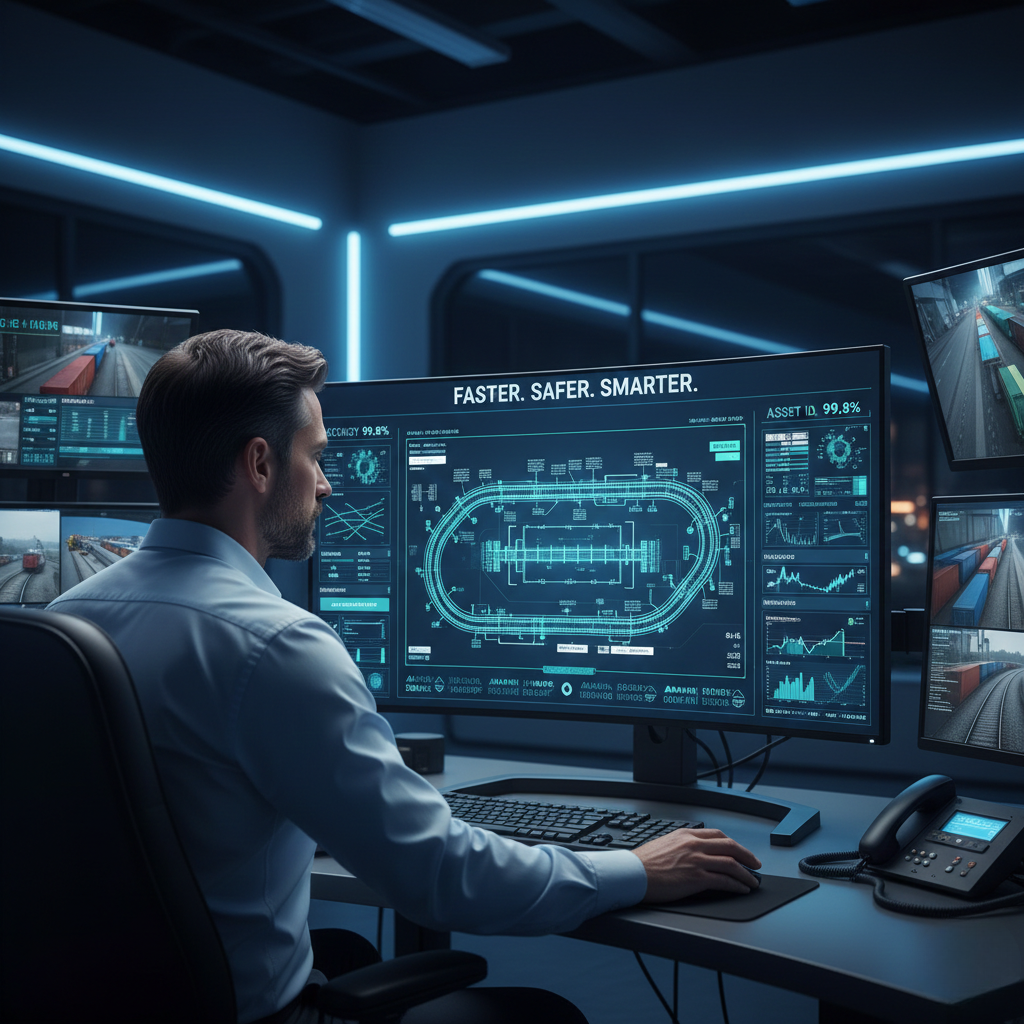
A rail OCR portal is a set of cameras and lights mounted beside or over the track. As the train passes, the cameras capture images of every wagon and container. OCR software then reads the wagon numbers, container numbers and ISO codes, and links them to the train and its position in the consist.
Modern rail OCR uses machine learning, so it keeps improving its recognition of different fonts, faded paint, dirt and damage, and handles day and night conditions.
What a rail OCR system captures
| Data | Why it matters |
|---|---|
| Wagon numbers | Identify each wagon and its position in the train |
| Container numbers and ISO codes | Link containers to the right wagon and booking |
| Hazard labels and markings | Flag dangerous goods for safe handling |
| Seal and door checks | Support security and customs processes |
| Images | Provide evidence for damage claims and disputes |
Benefits of rail OCR
- Faster train processing: no need to stop or walk the train to note numbers.
- Higher accuracy: automatic reading removes manual copying errors.
- Better safety: fewer staff working beside moving trains.
- Real-time data: terminal and rail systems are updated as the train arrives.
- Lower costs: less manual checking at every arrival and departure.
Where rail OCR is used
- Port rail terminals handling container trains to and from the quay.
- Inland container depots (ICDs) and dry ports.
- Rail freight yards where trains are checked and re-formed.
- Plant and warehouse sidings receiving raw materials or shipping products by rail.
Rail OCR often works alongside crane OCR and gate OCR as part of wider terminal automation.
Rail OCR portal solutions from Suraj Informatics
Suraj Informatics provides the railway train OCR portal for ports, ICDs and rail sidings, using proven automated methods to increase throughput and lower operating costs, with integration into terminal and enterprise systems on the GATIVRA platform.
Rail OCR: common questions
What is rail OCR?
Rail OCR is a camera and software system that automatically reads wagon numbers, container codes and other markings on passing trains.
Does the train have to stop?
No. Rail OCR portals are designed to capture images while the train is moving.
Does rail OCR work at night?
Yes. Portals use their own lighting and cameras designed for day and night operation.
Can rail OCR connect to our terminal system?
Yes. Recognised data and images can be sent to terminal operating, rail management or ERP systems.
Talk to our rail automation team
Tell us about your rail sidings, train volumes and systems, and we will suggest the right rail OCR setup.