
IoT Smart City Solutions in India: How to Choose the Right IoT Solutions Company
India is adding the population of a mid-sized country to its cities every few years, and the municipal systems underneath — traffic signals, water networks, street lighting, waste collection, enforcement — were never designed for that load. IoT smart city solutions close the gap by instrumenting those assets so they report their own condition instead of waiting for a complaint.
The technology question is mostly settled. The harder question for a municipal corporation, a SPV or an industrial township is commercial: which of the many iot solution providers in india can actually deliver at city scale, integrate with what you already run, and still be answering the phone in year five. This guide covers both — how the internet of things works in an urban context, and how to evaluate the vendors who build it.
What IoT Smart City Solutions Actually Do
Strip away the marketing and a smart city programme does one thing: it converts physical events into data fast enough to act on them. A bin fills, a pump loses pressure, a junction backs up, a street light fails — each becomes a timestamped record instead of a phone call three days later.
That is the whole premise of iot and smart cities. The value is not the sensor; it is the shortened gap between something happening and somebody (or some rule) responding to it.
The three shifts a city notices first
- Reactive maintenance becomes scheduled maintenance — assets report faults before citizens do
- Flat-rate service becomes demand-based service — collection routes and lighting follow actual usage
- Departmental data becomes shared data — traffic, police, water and transport read the same feed
Smart City in IoT: The Four-Layer Architecture
Every credible smart city in iot deployment is built in four layers. Vendors who only supply one of them will hand you an integration problem later, so it is worth knowing which layer each quote actually covers.
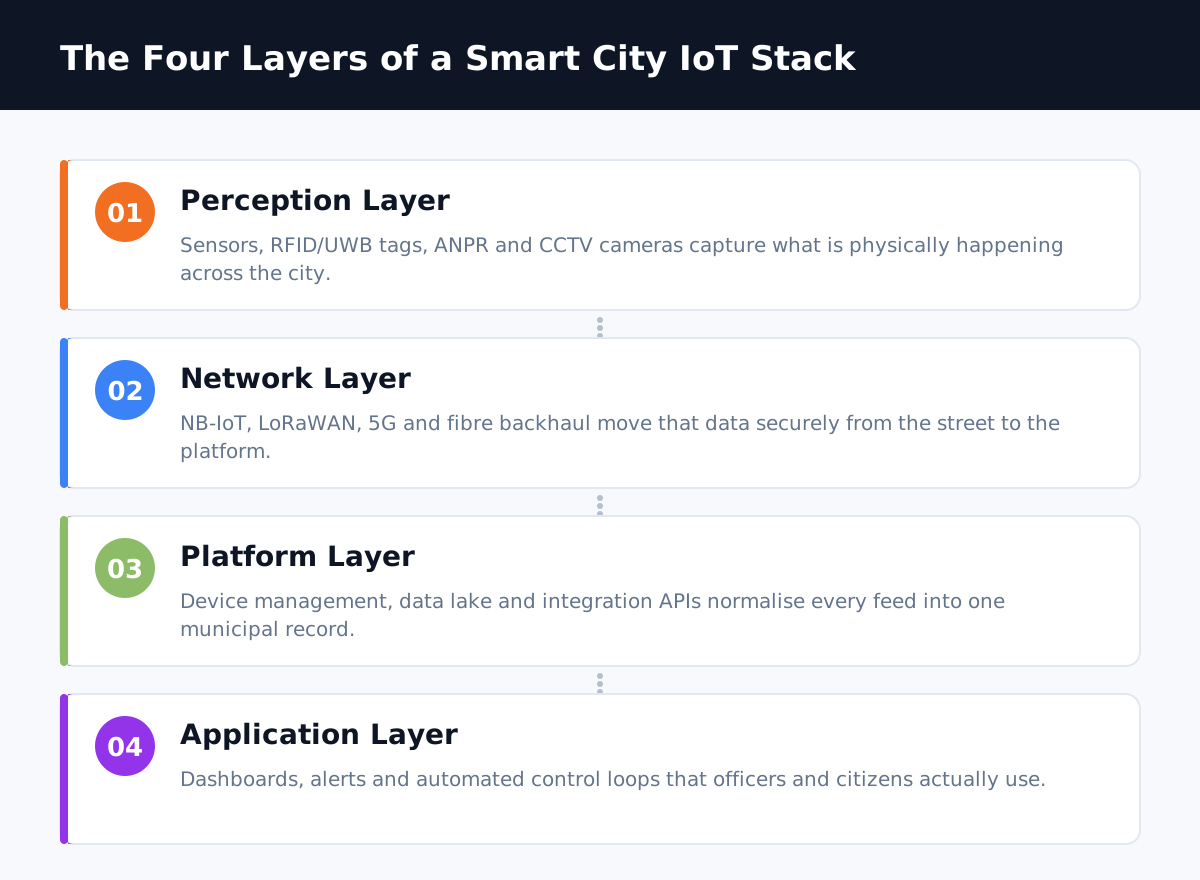
Perception is the street-level hardware: air-quality and flow sensors, ANPR and CCTV cameras, RFID, BLE and UWB tags on municipal assets. Network is how that data travels — NB-IoT and LoRaWAN for low-power, low-bandwidth sensors, 5G and fibre for video. Platform is device management, storage and the APIs that normalise a dozen vendors’ formats into one record. Application is what an officer actually opens: a dashboard, an alert, an automated signal-timing change.
Most failed projects fail at layer three. Cities buy excellent sensors from four suppliers and end up with four dashboards that do not talk to each other — which is why iot internet of things platforms with open APIs matter more than sensor specifications.
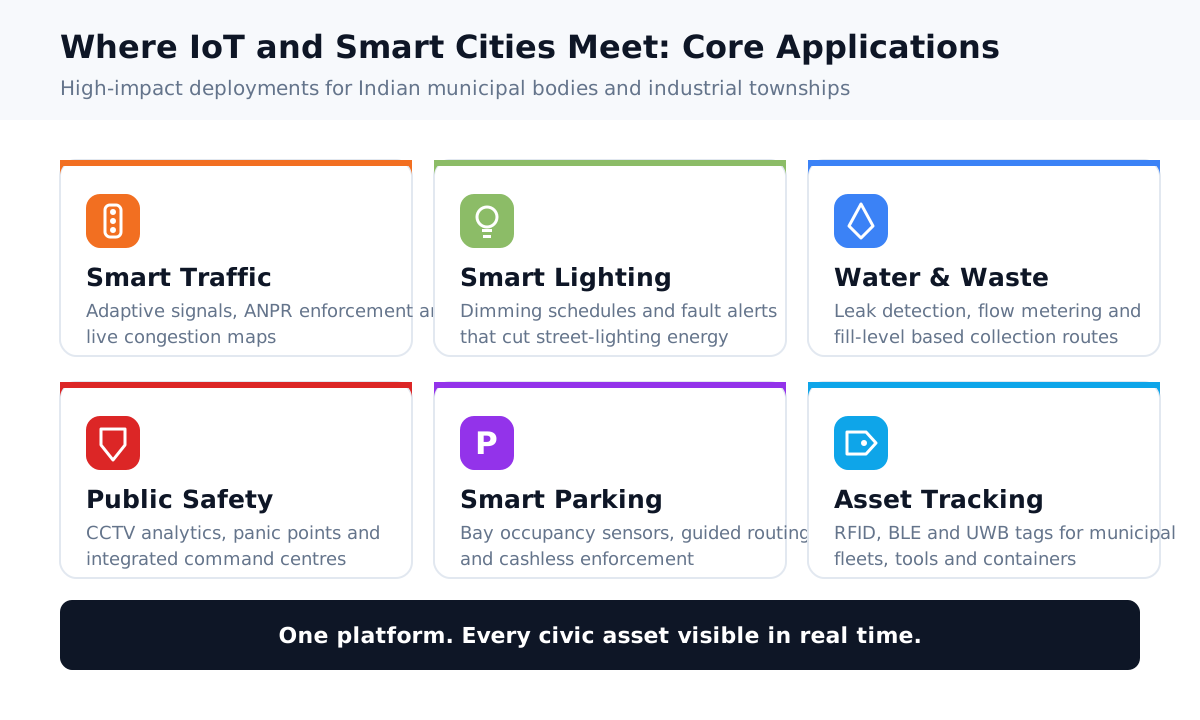
Where IoT and Smart Cities Meet: The High-Value Applications
Not every use case pays back at the same speed. The deployments below are the ones Indian municipal bodies and industrial townships tend to fund first, because the savings are measurable within a single budget cycle.
Reading the list commercially
Street lighting and waste collection usually clear payback fastest, because the saving is a line item you already pay every month. Traffic and public safety take longer to monetise but carry the most political weight. Asset tracking sits in between — low capital cost, immediate reduction in loss and search time, and it reuses the same network you laid for everything else.
What Smart City IoT Delivers in Practice
Treat any vendor number as a hypothesis until your own pilot confirms it. The ranges below are what well-scoped smart city iot programmes typically report — useful for building a business case, not for signing one.
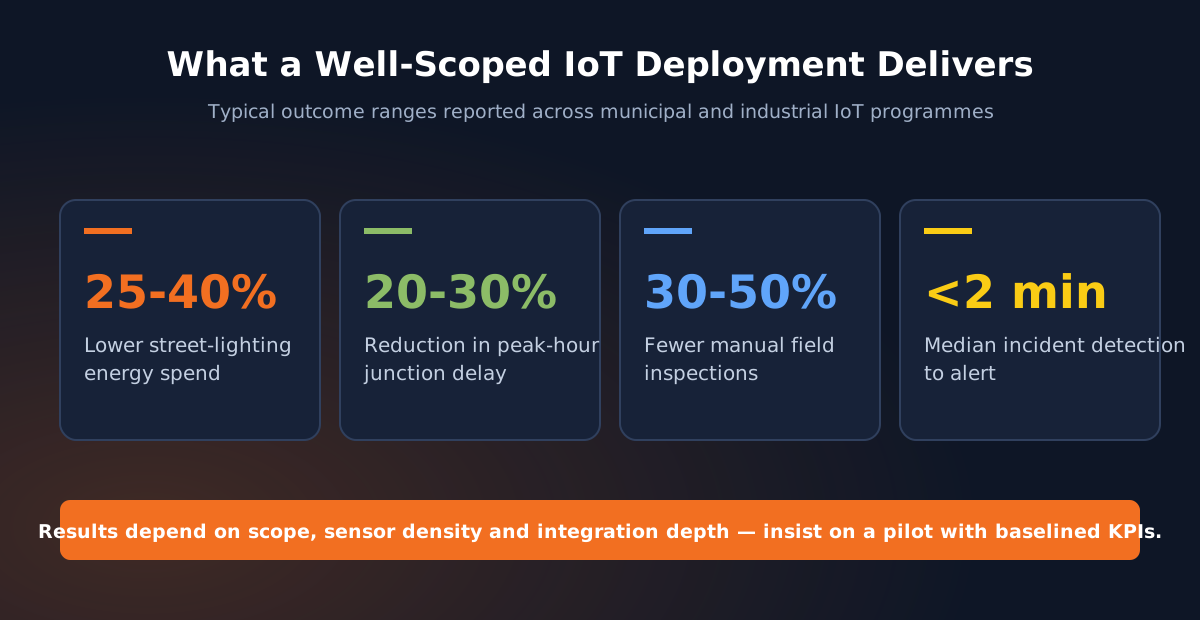
Two variables move these numbers more than anything else: sensor density and integration depth. A thin deployment across a whole city produces dashboards nobody trusts; a dense deployment in one ward, wired properly into the command centre, produces a result you can defend in a council meeting and then replicate.
How to Evaluate IoT Solution Providers in India
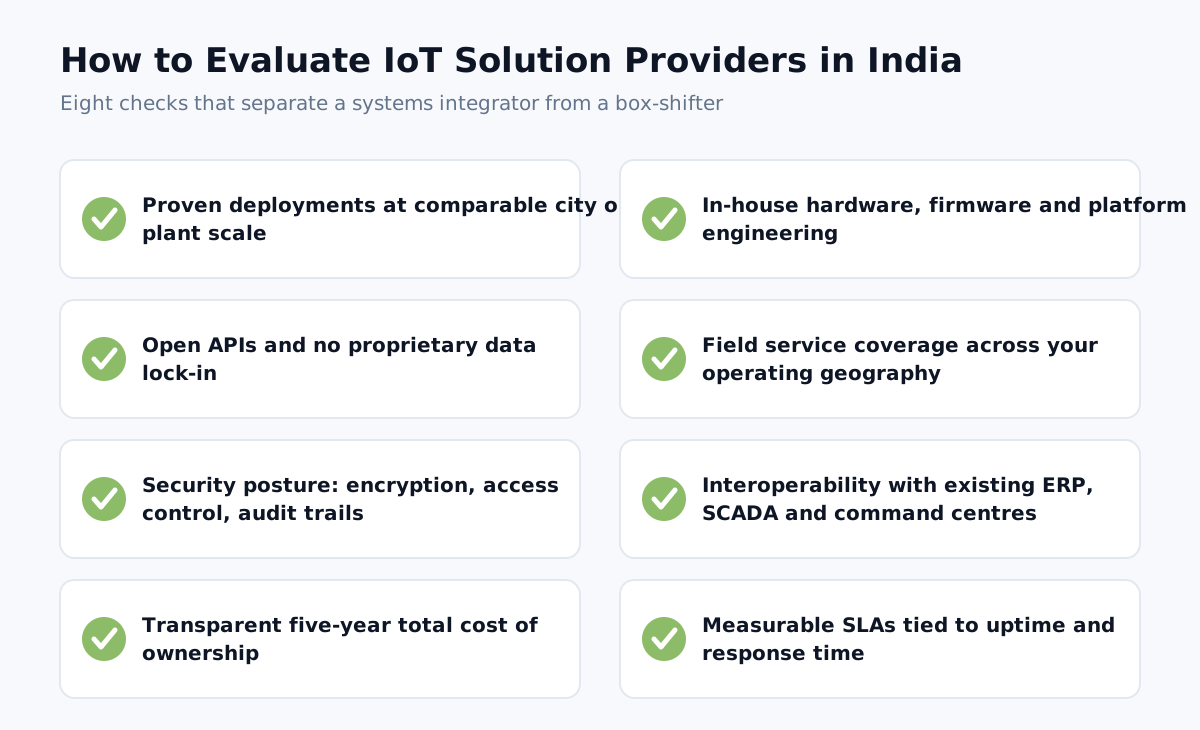
There is no shortage of iot companies india bidding for civic work, and the range in capability is wide — from full-stack systems integrators to resellers who will disappear once the warranty lapses. These eight checks separate them quickly.
Questions worth asking in the technical round
- Which layers of the stack do you build yourself, and which do you buy in?
- Show me a deployment at our scale that has been running more than three years.
- Can we export our raw data at any time, in an open format, without your help?
- What is the five-year cost including SIM, cloud, replacements and support?
- How does your platform integrate with our existing SCADA, ERP and command centre?
- What is your field response time in our district, and who provides it?
A capable iot solutions company in india will answer all six without rewording the question. The ones that deflect to product datasheets are usually the ones you will be managing, rather than being served by, in year two. Shortlist three iot companies india can actually field at your scale, then let the pilot decide.
A Five-Stage Smart City IoT Roadmap for Indian Deployments
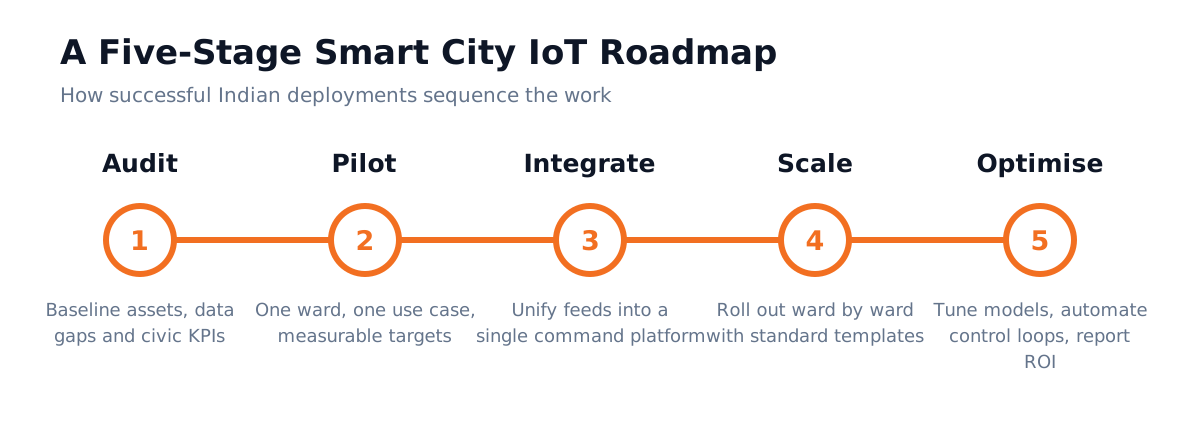
The most common mistake is buying city-wide on day one. Sequencing the work keeps the budget defensible and gives you real numbers before the large commitment — and it is the sequence every experienced iot solutions company in india will propose whether or not you ask for it.
For a broader primer on how the internet of things reshapes urban living, see our guide to building connected urban ecosystems.
Audit first — you cannot claim a 30% improvement without a baseline. Pilot one ward and one use case with targets agreed in writing. Integrate before you scale, so the second ward inherits a working platform rather than a second silo. Scale using templates, not bespoke designs. Optimise once you have enough history for the analytics to be worth anything.
Why an Industrial Automation Background Matters
Civic infrastructure is closer to plant automation than it is to consumer technology. The devices sit outdoors for a decade, the networks are patchy, the users are shift operators rather than analysts, and nothing can be taken offline for a weekend to be upgraded.
Suraj Informatics builds in that environment. Our gate automation, unmanned weighbridge, truck turnaround and RFID/BLE/UWB asset-tracking deployments run inside manufacturing plants, warehousing hubs and ports across India and the UAE — sites with exactly the uptime, ruggedisation and integration constraints a municipal deployment has. The same control-tower architecture that gives a plant one view of every vehicle and asset gives a city one view of every civic asset.
What we bring to a smart city programme
- In-house hardware, firmware and platform engineering — not resold boxes
- Open APIs and full data portability, with no proprietary lock-in
- Proven RFID, BLE, UWB and video-analytics deployments at industrial scale
- Integration experience with ERP, SCADA and existing command centres
- Field service across India, plus a delivery unit in the UAE
Frequently Asked Questions About IoT Smart City Solutions
What are IoT smart city solutions?
IoT smart city solutions are connected sensors, networks, platforms and applications that let a city monitor and control its physical infrastructure in real time — traffic signals, street lighting, water networks, waste collection, parking and public safety — from a single operational view instead of separate manual systems.
How do I choose between IoT solution providers in India?
Judge them on the layers they build themselves, comparable deployments at your scale, open APIs and data portability, five-year total cost of ownership, integration with your existing ERP, SCADA and command centre, security posture, field service coverage in your district, and SLAs tied to measurable uptime and response times.
What is the difference between IoT and a smart city?
The internet of things is the underlying technology — devices that sense, connect and report. A smart city is one application of it: using that data to run municipal services. Every smart city is built on IoT, but most IoT deployments are industrial rather than civic.
Which smart city IoT application pays back fastest in India?
Street lighting and waste collection usually pay back fastest, because both replace a recurring cost you already carry every month. Traffic management and public safety take longer to show a financial return but typically carry higher political priority — see our note on CCTV surveillance and e-challan enforcement.
How long does a smart city IoT deployment take?
A single-ward pilot with one use case is typically live within eight to sixteen weeks. City-wide rollouts run in phases over eighteen months to three years, depending on civil work, network availability and how many legacy systems need integrating.
Planning a smart city or industrial IoT deployment?
Tell us the assets you need visibility over and the outcome you are measured on. We will come back with a scoped pilot, a baseline plan and a five-year cost — not a datasheet.