

Smarter Streets: How CCTV Surveillance and an E-Challan System Are Modernizing Traffic Enforcement

Smarter Streets: How CCTV Surveillance and an E-Challan System Are Modernizing Traffic Enforcement
A look at how automated violation surveillance — pairing security surveillance cameras with ANPR and an e-challan management system — is helping city and highway authorities replace manual policing with real-time, evidence-backed enforcement.
Traffic violations — signal jumps, wrong-way driving, triple riding, no-helmet riding, and over-speeding — are difficult to police at scale using officers stationed at a handful of junctions. Manual enforcement is inconsistent, resource-heavy, and leaves most violations unrecorded and unpunished, which undermines road safety and municipal revenue alike.
A Violation Surveillance & E-Challan Generation System (VSCGS) is designed to close that gap. By combining security surveillance cameras with automatic number plate recognition and a connected e challan management system, city and highway authorities can move from occasional manual checks to continuous, automated enforcement across every monitored junction.
Why Manual Traffic Enforcement Doesn't Scale
Traditional enforcement relies on officers physically present at a junction, which creates predictable, well-known gaps in coverage:
- Limited CoverageOfficers can only monitor a handful of junctions at a time, leaving most intersections and stretches of highway unsupervised for most of the day.
- Inconsistent EnforcementManual ticketing is subjective and easy to contest, which can undermine driver compliance and public trust.
- Delayed, Paper-Heavy RecordsPhysical challans are slow to issue, slow to pay, and difficult to reconcile against municipal or RTO databases.
Always-On Detection: CCTV Surveillance Cameras
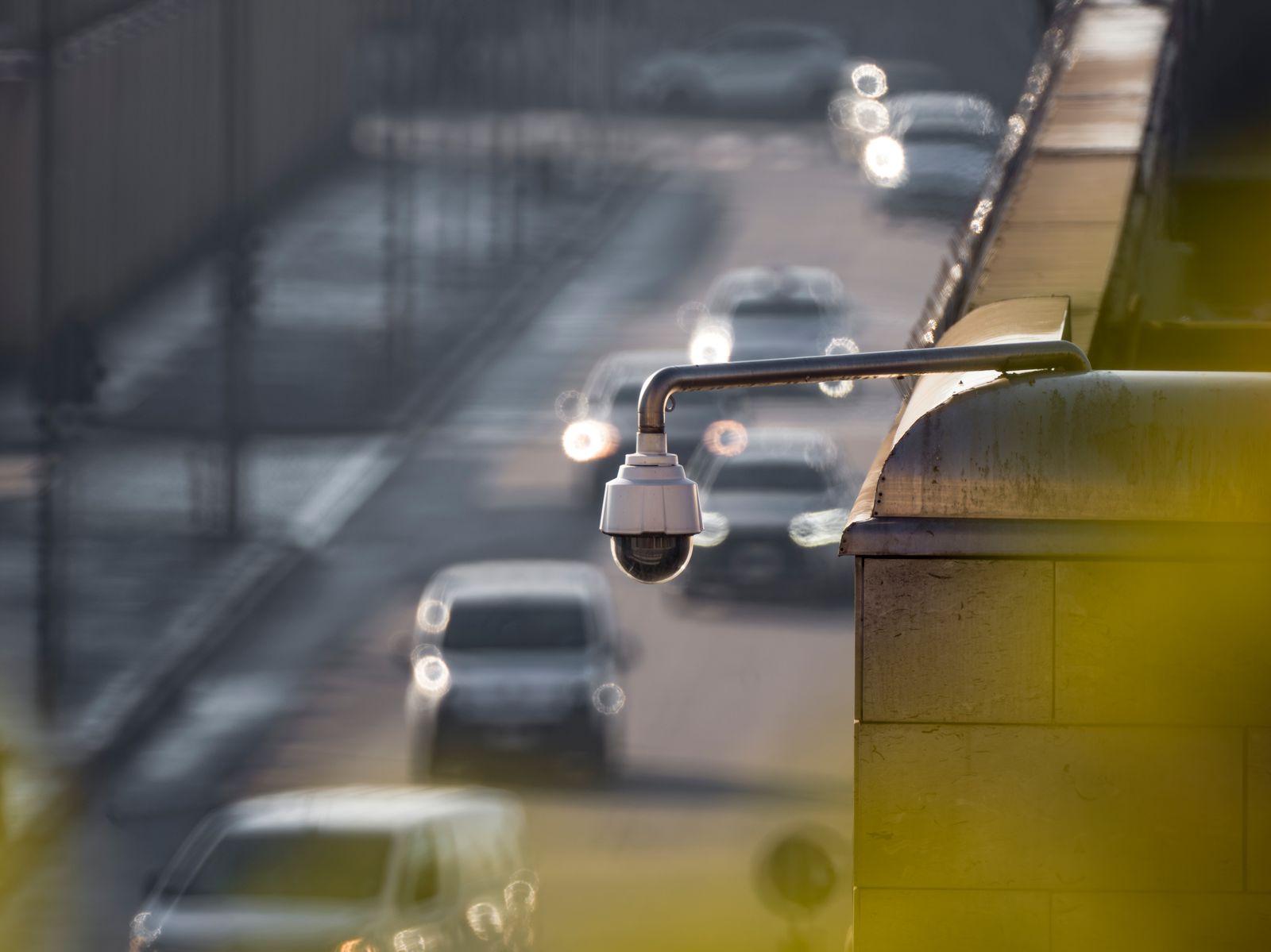
At the core of the system is a network of cctv surveillance camera units positioned at junctions, toll points, and high-risk stretches of road. Unlike a traditional CCTV feed that only supports after-the-fact review, these cameras are paired with on-edge video analytics that continuously scan for specific violation patterns in real time.

Continuous Monitoring
Fixed and PTZ cameras cover signal lines, lane markings, and helmet/seatbelt zones around the clock, in daylight and low-light conditions.

Automatic Number Plate Recognition
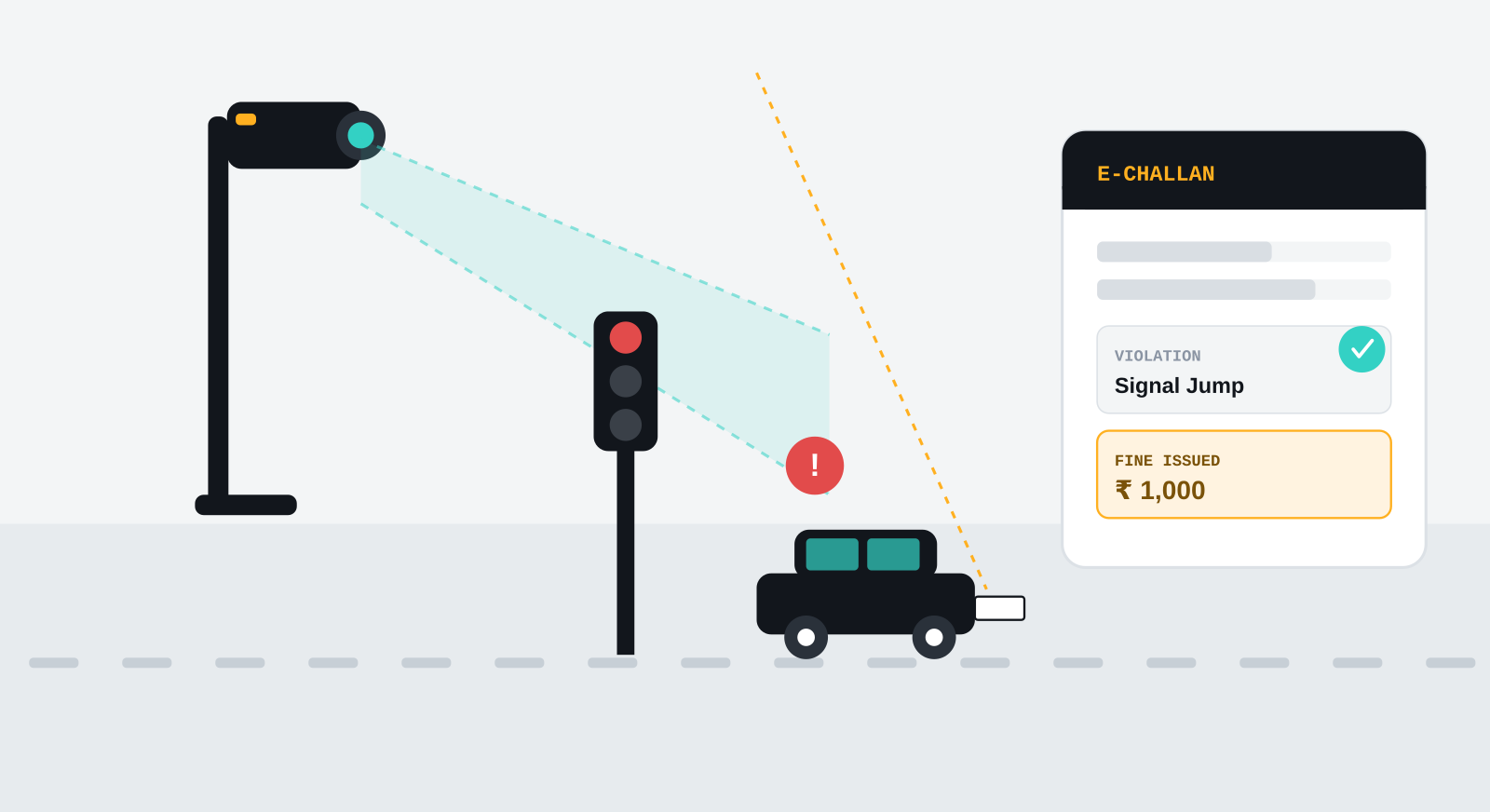
The moment a violation pattern is detected, ANPR isolates and reads the vehicle's plate, cross-checking it against the registration database.
From Detection to Dispatch: The E-Challan System
Once a violation is confirmed, the connected e challan system takes over. Video and image evidence, timestamp, location, and the violation type are packaged automatically and matched to the vehicle owner's record, removing manual data entry from the process entirely.

Automated Challan Issuance
A digital challan is generated with photographic evidence attached, then dispatched to the registered owner by SMS or the RTO's e-challan portal.

Auditable Evidence Trail
Every challan is backed by timestamped footage and plate-read confidence scores, making it straightforward to review or contest through proper channels.
City-Wide Visibility: The Enforcement Command Dashboard
A centralized dashboard gives traffic control rooms a live view of violations, challan status, and camera health across every monitored junction in the city or corridor. Instead of reconciling paper registers, supervisors can filter by junction, violation type, or time window to identify accident-prone spots and repeat offenders.
Suraj Informatics' Approach to Violation Surveillance
Among the vendors building this kind of infrastructure is Suraj Informatics, whose Violation Surveillance & E-Challan Generation System (VSCGS) is aimed at municipal traffic departments, highway authorities, and toll operators. According to the company, the platform is engineered to integrate with existing CCTV networks rather than requiring a full camera replacement.
Suraj Informatics says VSCGS combines ANPR, video analytics, and automated challan dispatch, with API integration into RTO and municipal traffic management systems, so enforcement data stays synchronized with official records.
Conclusion: Enforcement That Scales With the City
As traffic volumes grow, enforcement that depends on manual patrols struggles to keep pace. Pairing security surveillance cameras with an automated e challan management system is one route authorities are using to close coverage gaps, speed up ticket issuance, and build a more consistent, evidence-backed enforcement record.
Evaluating a violation surveillance system?
Suraj Informatics offers consultations for municipal and highway authorities exploring VSCGS.