



Container terminals, ports and plants handle hundreds of trucks and drivers every day. RFID (radio-frequency identification) identifies each one automatically, so the right truck, driver and container are always matched. As an RFID solution provider in India, Suraj Informatics supplies the cards, tags, readers and software for this. This guide explains how RFID works in terminals, its main uses and how it compares with number-plate recognition.
Key takeaways
- RFID tags on trucks and RFID cards for drivers are read automatically when they come into range.
- Tag data passes through middleware to the terminal operating system (TOS).
- RFID matches truck, driver and container at entry, exit and transfer points.
- Long-range windshield tags are a low-cost, accurate alternative or complement to licence plate recognition.
How RFID works in terminals
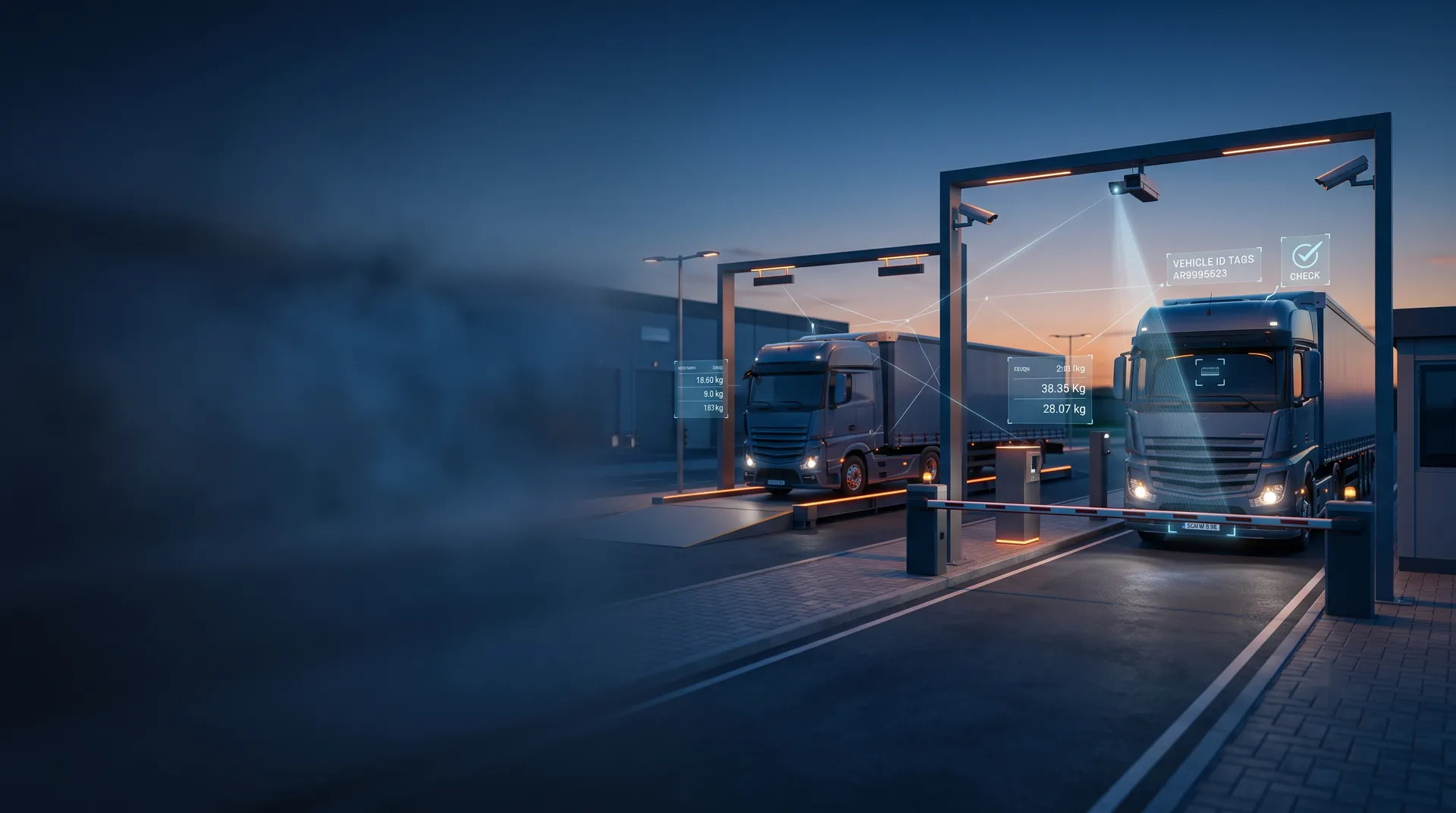
Many terminals use RFID to identify and track people and assets. RFID tags are fixed to vehicles and assets or built into access and ID cards, and RFID readers read them when they come into range. The data is passed to middleware software and then to the terminal operating system (TOS).
Long-range RFID can identify moving objects accurately, even in difficult conditions where other methods cannot meet the need for speed and range. This makes fully automated asset and vehicle tracking possible.
RFID cards for truck drivers
Driver RFID cards are used for security and access control. They are usually passive cards printed with a photo and personal details, and can include biometrics. A terminal’s reader system can track every truck and driver on site and act as an access control system that supports ISPS compliance. If the terminal already uses cards for ISPS, they can often be extended for tracking and tracing.
RFID vehicle identification at the gate and beyond
| Location | What RFID checks |
|---|---|
| Entry gate | Matches the gate lane to the OCR portal, so the right OCR data is linked to the right truck |
| Exit gate | Confirms the right truck is leaving, with truck ID, container IDs and driver ID matched |
| Transfer area | Makes sure the right container is loaded onto the correct chassis |
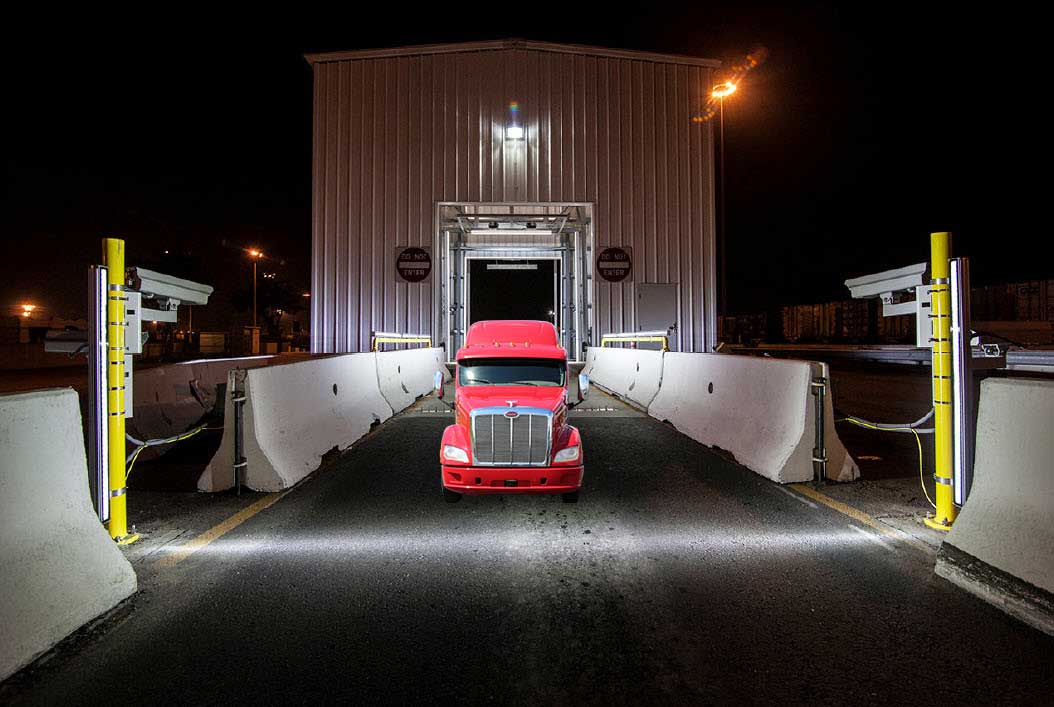
Longer-range RFID tags are usually fixed to the truck windshield and read as the truck passes a reader. Readers are typically mounted in OCR camera portals, gate lanes and exchange areas.
RFID compared with licence plate recognition
| RFID | Licence plate recognition (LPR / ANPR) | |
|---|---|---|
| How it identifies | Reads a tag or card by radio | Reads the number plate with a camera |
| Accuracy | Very high, not affected by dirty plates or light | Good, but affected by damaged plates, glare and weather |
| Setup | Needs tags on each vehicle | No tag needed on the vehicle |
| Best use | Regular trucks and drivers, access control | Visiting vehicles and open access |
Many terminals use both: RFID for registered trucks and drivers, and ANPR cameras for vehicles without tags.
RFID solutions from Suraj Informatics
Suraj Informatics is an RFID solution provider in India, delivering complete turnkey systems for terminals, ports and plants: RFID cards, tags and readers, controllers at the gate, and software for records, registration and access control interfaces. These connect with gate, yard and weighbridge automation on the GATIVRA platform. For asset tracking software options, see our guide to RFID asset tracking software.
RFID solutions for terminals: common questions
How is RFID used in a container terminal?
RFID tags on trucks and cards for drivers are read at gates, lanes and transfer areas to identify vehicles and people automatically and link them to the right containers.
Does RFID support ISPS compliance?
RFID access cards can be part of an ISPS-compliant access control system, and existing ISPS card systems can often be extended for tracking.
Is RFID better than ANPR?
RFID is very accurate for registered vehicles and drivers. ANPR needs no tag. Many terminals use both together.
Where are RFID tags placed on trucks?
Long-range tags are usually fixed to the inside of the windshield, where gate and lane readers can read them.
Talk to our RFID team
Tell us about your gates, lanes and truck volumes, and we will suggest the right RFID setup.