



A weighbridge error of a few kilograms looks trivial on one truck. Repeated across hundreds of trucks every day, it becomes a large and steady loss. As a simple example, if each of 300 trucks is recorded 100 kg too low, 30,000 kg of material goes unrecorded every day. This guide shows where weighing errors come from and how a weighbridge automation system reduces them.
Key takeaways
- Small errors per truck add up: 100 kg across 300 trucks is 30,000 kg a day.
- Errors come from manual entry, poor truck positioning, unstable readings and bypassed weighments.
- Automation controls the process with RFID identification, boom barriers, signals and displays.
- Calibration still matters: automation does not replace it.
How a small weighing error becomes a daily loss
The example below uses simple arithmetic to show the effect. The error per truck and the truck count are illustrative; use your own figures to estimate your exposure.
| Error per truck | Trucks per day | Unrecorded material per day |
|---|---|---|
| 50 kg | 300 | 15,000 kg |
| 100 kg | 300 | 30,000 kg |
| 100 kg | 150 | 15,000 kg |
Where weighbridge errors come from
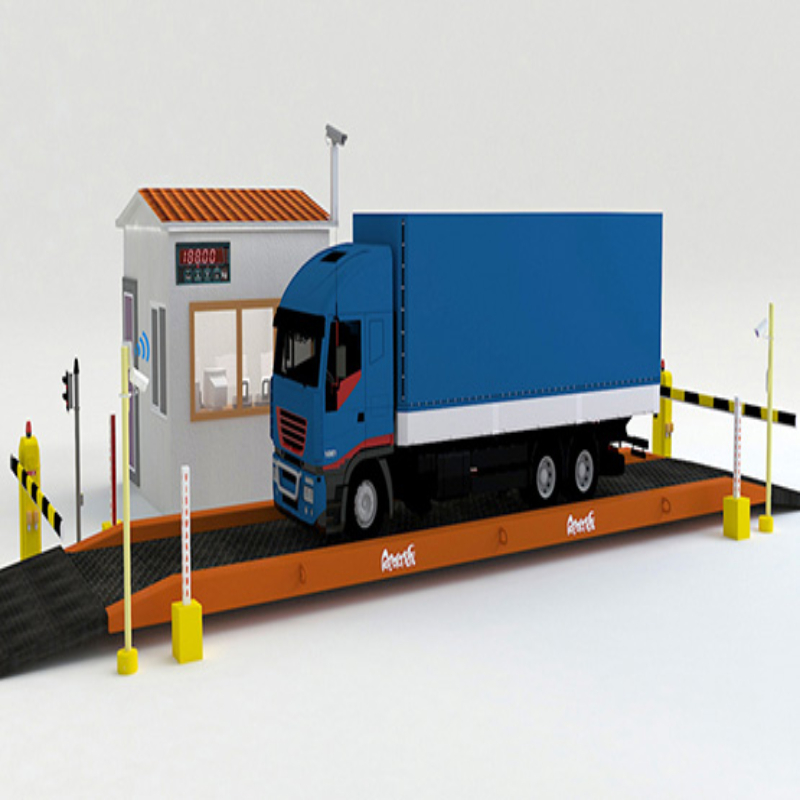
- Manual entry. An operator keys in the weight, the vehicle or the party, and a slip becomes a permanent record.
- Poor positioning. A truck not fully on the platform gives a wrong reading. See truck positioning on weighbridges.
- Unstable readings. Weight captured while the truck is still moving or settling.
- Bypassed weighments. Outgoing goods that never pass over the platform.
- Unidentified vehicles. No way to check who entered or left.
How a central control system guides each truck
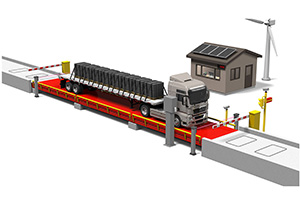
An automated weighbridge is managed by one central control system. It uses RFID readers, boom barriers, traffic signals, sensors and LED information displays to identify the vehicle and guide the driver along the correct path. The truck stops on the platform, is weighed and leaves without the driver leaving the cab.
Checks that stop bad weights from being recorded
- Identify first. The vehicle is read by RFID before it reaches the platform.
- Position check. Sensors and lights confirm the truck is fully on the platform.
- Stable reading. The weight is captured only when it is steady.
- Record with images. The weight is saved with the vehicle and time, so it can be audited.
- Block unauthorised vehicles. Barriers and alerts stop vehicles that are not on the approved list.
Weighbridge losses and how Suraj Informatics reduces them
Suraj Informatics integrates weighbridge automation for plants, mines and logistics sites. To estimate your own savings, see weighbridge automation ROI and common weighbridge problems and RFID solutions.
Calibration note: automation does not replace legal metrology. The weighbridge, load cells and indicator must still be calibrated, stamped and verified at the intervals required by the Legal Metrology authorities, and after any repair or relocation.
Weighbridge measurement errors: common questions
What causes weighbridge errors?
The usual causes are manual data entry, poor truck positioning, readings taken before the weight is stable, bypassed weighments and unidentified vehicles.
How much can small errors cost?
The cost depends on the error per truck and the number of trucks. For example, 100 kg across 300 trucks is 30,000 kg per day.
Does automation make weighing legal metrology compliant?
No. The weighbridge itself must be calibrated and certified. Automation improves the process around the weighing.
Can the driver stay in the vehicle?
Yes. In a fully automated lane the truck is identified, guided and weighed without the driver leaving the cab.
Talk to our weighbridge team
Tell us about your weighbridge and vehicle types, and we will suggest the right sensors and guidance devices.