



Many plants lose material and time at the weighbridge without noticing: manual entries, trucks parked half on the platform, vehicles bypassing the scale and slow gate processes. An automated, RFID-based weighbridge system fixes these problems by identifying every truck, capturing weights automatically and controlling movement. This guide lists the common weighbridge problems and how automation solves each one.
Key takeaways
- Manual weighbridges suffer from slow entries, data errors, theft and bypassing.
- RFID tags identify trucks automatically at entry, exit and the weighbridge.
- Sensors, cameras and barriers stop mispositioned trucks and unauthorised movement.
- Automation cuts long-term costs and frees staff for other work.
Common weighbridge problems
| Problem | Result |
|---|---|
| Slow weight capture at entry and exit gates | Truck queues and lost time |
| Manual recording of truck and driver details | Typing errors and delays |
| No tracking of trucks inside the plant | Lost visibility and misuse of vehicles |
| Trucks bypassing the weighbridge | Finished goods leave unweighed, causing material loss |
| Manual entry errors by operators | Wrong weights in billing and stock |
| Trucks wrongly positioned on the platform | Incorrect weights and losses over time |
| Unauthorised vehicle entry | Security and theft risk |
How an RFID-based weighbridge system solves them
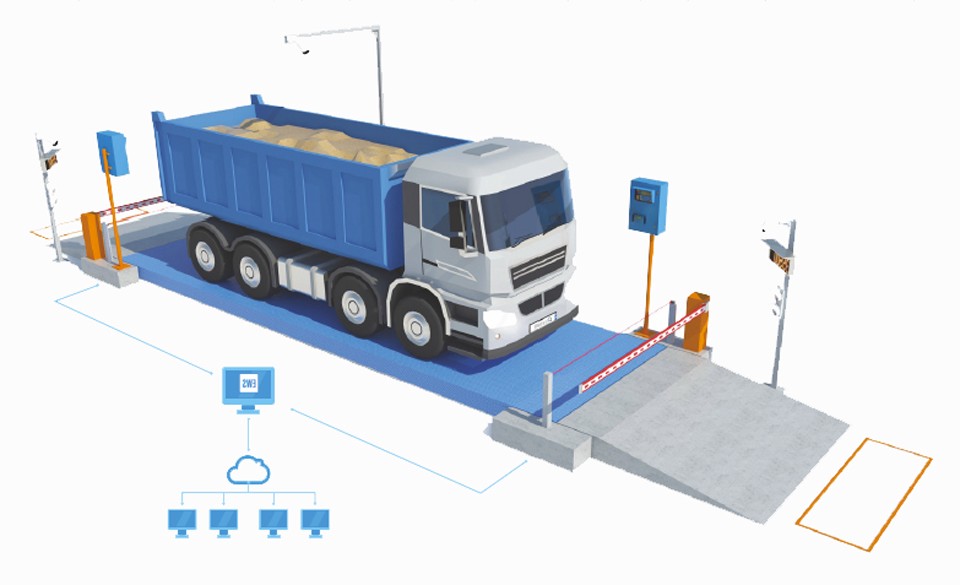
- RFID at the gate. Each truck carries an RFID tag that is read automatically at entry and exit.
- Automatic weighing. The weighbridge reads the tag, checks position and captures the weight.
- Barrier control. Barriers open only for authorised trucks with a valid weighment.
- Movement tracking. Truck movements inside the plant are recorded against each trip.
- System update. Weights and trip data flow to ERP and reports without re-keying.
Adding ANPR and traffic management
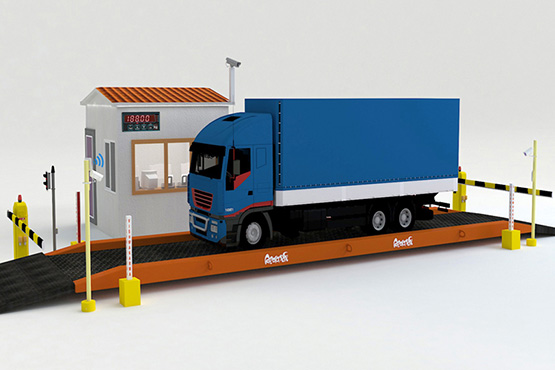
Integrating the weighbridge with number-plate recognition cameras and automated traffic management improves the flow of trucks into and out of the site and adds another layer of security. Cameras also provide image evidence for every weighment. See how this stops losses in our guide to weighbridge fraud prevention.
Benefits of RFID-based weighbridge automation
- Accurate entry and exit with full RFID-based automation.
- Reliable, repeatable weights without manual entry.
- Lower long-term costs, as the weighbridge no longer needs a full-time operator.
- Better use of staff, who can be moved to higher-value work.
- Stronger security against theft and unauthorised entry.
RFID weighbridge automation from Suraj Informatics
Suraj Informatics delivers the unmanned weighbridge system with RFID, ANPR, cameras, barriers and software, integrated with gate and yard automation on the GATIVRA platform.
Calibration note: automation does not replace legal metrology. The weighbridge, load cells and indicator must still be calibrated, stamped and verified at the intervals required by the Legal Metrology authorities, and after any repair or relocation.
RFID weighbridge automation: common questions
How does RFID help at the weighbridge?
RFID tags identify each truck automatically, so weights are linked to the right vehicle and trip without manual entry.
Can automation stop trucks bypassing the weighbridge?
Yes. Barriers and RFID checks at the exit gate can block trucks that have no valid weighment.
Do we still need a weighbridge operator?
Not full time. The system runs automatically, with staff handling exceptions and supervision.
Can RFID and ANPR be used together?
Yes. Many sites use RFID for registered trucks and ANPR for others or as a second check.
Talk to our weighbridge team
Tell us where your weighbridge loses time or material today, and we will suggest the right automation.