



RFID technology identifies items by radio instead of by sight. A tag carries an ID, a reader collects it, and software records it. The hardware choices are what decide whether a project works: the tag must suit the surface, and the reader must suit the place. This guide compares the main tag and reader types.
Key takeaways
- An RFID system has two main parts: tags on items and readers that collect their data.
- Tags differ by form, such as paper labels and tough metal-mount tags.
- Fixed readers suit gates and portals, and handheld readers suit walk-around counting.
- Test tags on your real items and surfaces before you buy in volume.
How tags and readers work together
A reader sends out a radio signal. A tag in range answers with its stored ID, and the reader passes it to software that links the ID to an item, vehicle or person. No line of sight is needed, so many tags can be read quickly. For benefits in plants, see RFID advantages for plants.
Types of RFID tags and where each fits
Tags are made in different forms for different surfaces and conditions.
| Tag type | Best used for |
|---|---|
| Paper label tag | Printed, encoded item or carton labels |
| Metal-mount tag | Equipment, tools and metal surfaces |
| Hard-case tag | Rough handling, moisture and impact |
| Card or badge | People and driver identification |
Metal and liquids can disturb ordinary tags, so choose a type made for the surface.
Fixed and handheld RFID readers
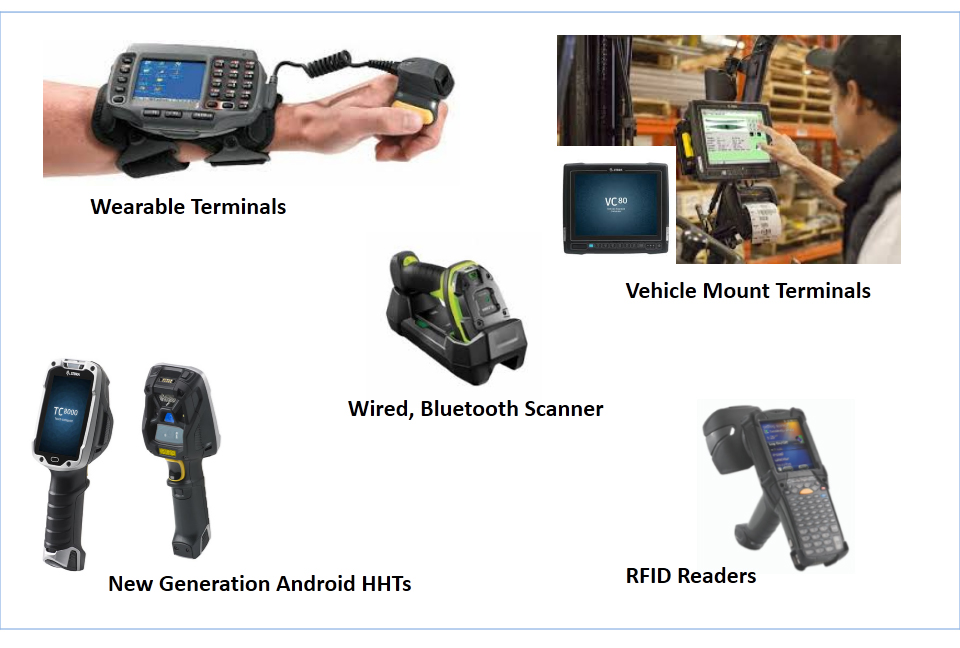
Fixed readers with antennas are mounted at entry and exit gates, on portals or above conveyors, and read tags as items or vehicles pass. Handheld readers connect by cable or Bluetooth to a phone or computer, so staff can scan shelves, stores and yards. Desktop readers encode or check tags at a counter. Look at long-range RFID for vehicle identification for how vehicles are read at gates.

Matching tag and reader to the job
List what you will tag, what surface it sits on, how far the read must reach and how fast items move. Then match the tag type and reader to those conditions. The picture below shows the range of devices a site may combine. Software also matters; see RFID asset tracking software compared.
Choosing RFID hardware with Suraj Informatics
Suraj Informatics supplies and integrates RFID solutions, including tags, readers and software. Tell us what you want to identify and where, and we will recommend hardware and a test on your items.
RFID technology: common questions
What is RFID technology?
It is a way to identify items using radio signals between a tag and a reader.
Is RFID the same as a barcode?
No. Barcodes need line of sight and are read one at a time. RFID tags can be read without line of sight and in groups.
Can RFID tags go on metal?
Yes, if the tag is designed for metal. Ordinary tags may not read well on metal.
How do I choose a reader?
Decide where reading happens. Fixed readers suit gates, and handheld readers suit walk-around counts.
Talk to our RFID team
Tell us what you want to tag and where it moves, and we will suggest the tags and readers.