


At a busy terminal or plant gate, every second spent identifying a truck adds to the queue. Long-range RFID identifies vehicles and drivers automatically as they drive through, without stopping or scanning anything by hand. This guide explains how long-range RFID vehicle identification works, where readers are placed and how it works with OCR and access control.
Key takeaways
- Long-range RFID reads windshield tags from several metres away while the truck is moving slowly.
- Driver RFID cards add a second check for access control and security.
- At gates, RFID matches the truck with OCR data in the correct lane.
- At exits and transfer areas, it checks that the right truck, driver and container belong together.
How long-range RFID identifies vehicles

A passive UHF RFID tag is fixed to the inside of the truck windshield. A reader mounted beside or above the lane sends a radio signal, the tag replies with its unique ID and the software looks up the vehicle, transporter and trip. Because the tag needs no battery and no line of sight like a barcode, it can be read reliably in rain, dust and at night.
| Item | Typical choice |
|---|---|
| Vehicle tag | Passive UHF windshield tag, tamper-evident so it cannot be moved to another truck |
| Driver card | Passive RFID card with photo ID, sometimes combined with biometrics |
| Reader | Fixed UHF reader and antenna at the gate lane, portal or transfer area |
| Software | Middleware that sends reads to the gate, access control or terminal system |
Driver RFID cards and access control
Many terminals issue RFID cards to drivers with a printed photo and personal details. The card is read at the gate together with the vehicle tag, so the system knows both who is driving and which truck it is. If your terminal already uses cards for ISPS compliance, the same card system can often be extended for tracking. Learn more about industrial access control for gates, contractors and vehicles.
Where RFID readers are placed
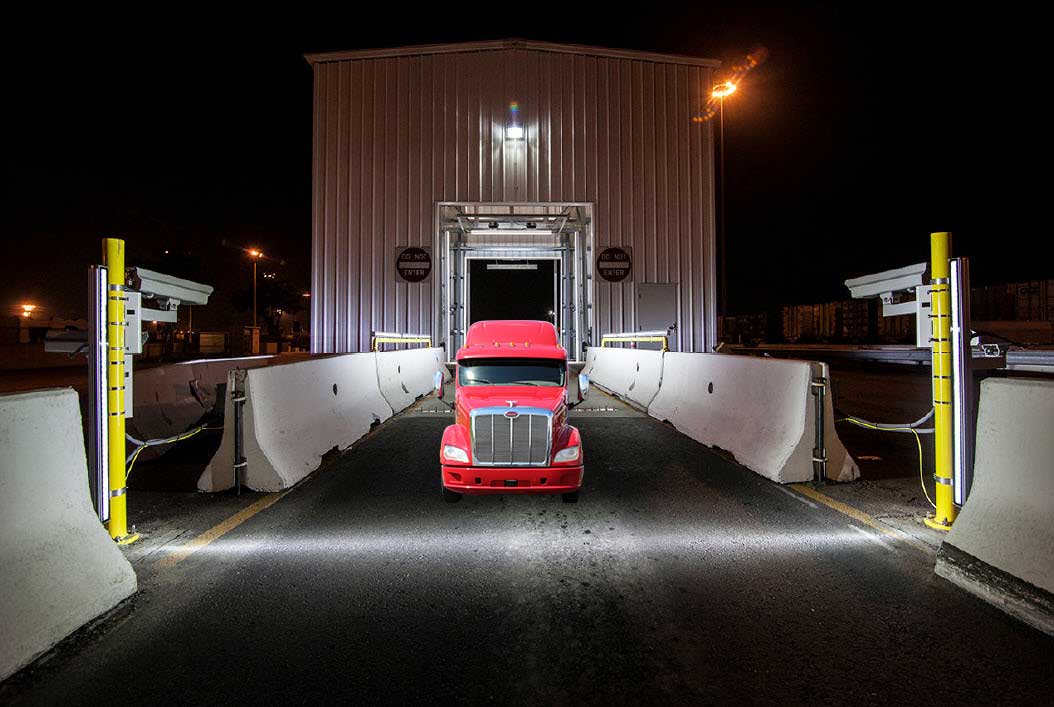
Readers are often mounted inside the OCR camera portal, so RFID and camera data are matched to the same lane.
| Location | What RFID checks |
|---|---|
| Entry gate lanes | Matches the truck with OCR data from the portal in the same lane |
| Exit gate | Confirms truck, driver and container IDs match before the truck leaves |
| Transfer or exchange areas | Makes sure the right container goes on the right chassis |
| Weighbridges and docks | Identifies the vehicle without stopping for manual entry |
RFID compared with number-plate recognition
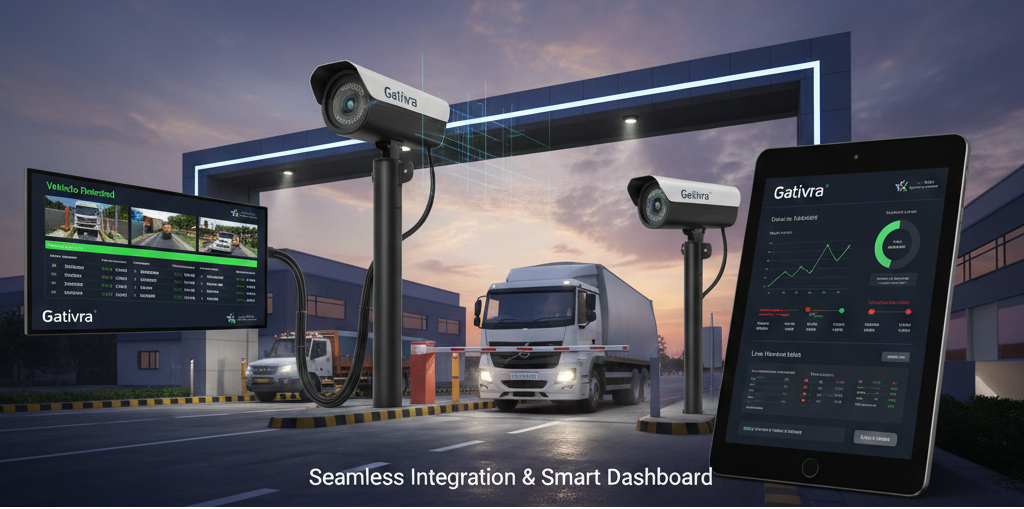
Number-plate recognition (ANPR or LPR) needs no tag, so it suits visiting vehicles. RFID is often more consistent for regular fleets because it does not depend on a clean, readable plate or good lighting. Many sites use both: RFID for registered trucks and ANPR as a second check or for vehicles without tags.
For a terminal-focused overview, see RFID for terminals and trucks, or compare RFID asset tracking software options. Suraj Informatics supplies RFID and RTLS solutions with hardware, software and integration.
Long-range RFID vehicle identification: common questions
What is the read range of long-range RFID?
Passive UHF systems typically read windshield tags from a few metres up to around ten metres, depending on the reader, antenna and tag.
Can an RFID tag be moved to another truck?
Tamper-evident windshield tags break when removed, which stops them being reused on another vehicle.
Do drivers need to stop at the gate?
Usually they only slow down. The reader identifies the vehicle as it passes and the barrier opens if the trip is valid.
Can RFID work with gate OCR?
Yes. Readers inside the OCR portal link the truck ID with container and plate data captured in the same lane.
Talk to our RFID team
Tell us about your gates, vehicles and drivers, and we will suggest the right RFID tags, readers and software.