

Maximizing Fleet Efficiency: The Ultimate Guide to Enterprise Fuel Management Solutions

Maximizing Fleet Efficiency: The Ultimate Guide to Enterprise Fuel Management Solutions
In large-scale industrial logistics, container terminals, and port operations, fuel is more than just a resource—it represents one of the single largest and most volatile operating expenses on a company’s balance sheet. When managing an extensive fleet of assets, even minor inefficiencies can ripple outward, causing substantial financial leakage. Traditional logging approaches like manual dipstick readings, paper refueling receipts, and unmonitored dispensing lines simply cannot deliver the real-time visibility required by modern supply chains.
To take complete command of operational overhead and prevent losses, heavy-duty enterprises are moving away from reactive oversight. By deploying an advanced, automated fuel management system (FMS), businesses can achieve complete structural visibility, optimize consumption, and protect their bottom line around the clock.
The Strategic Shift: Why Manual Tracking Fails Modern Fleets
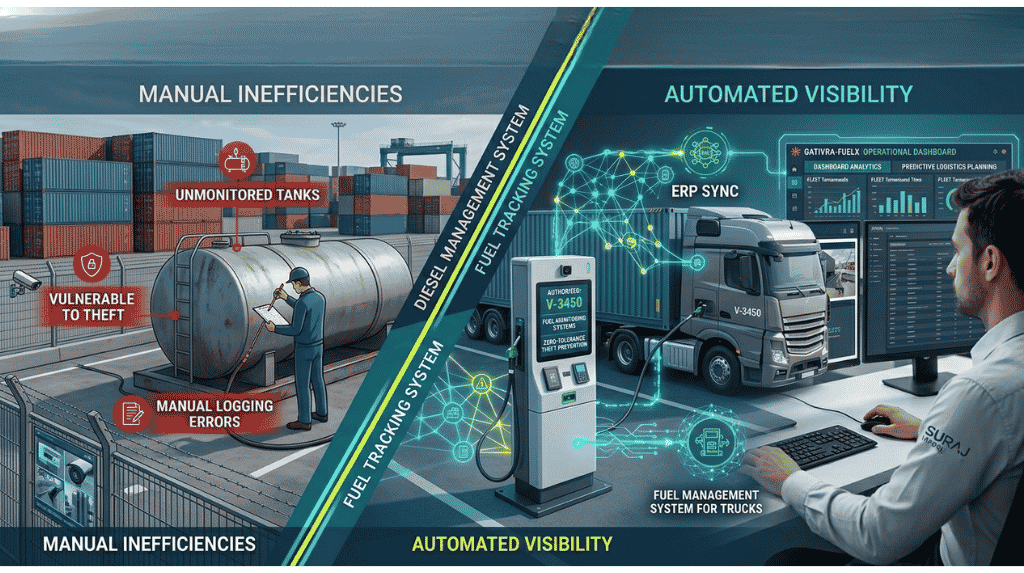
Historically, tracking bulk fuel storage and fleet dispensing relied on heavily fragmented data. This “human element” introduces significant blind spots. Manual logs are highly vulnerable to typos, administrative backlogs, and mathematical errors. More critically, an unmonitored tank leaves an organization entirely open to fuel theft, fuel siphoning, and unauthorized fuel dispensing.
Implementing a dedicated, automated diesel management system eliminates guesswork by creating a digitized, continuous chain of custody. From bulk storage drop-offs to individual vehicle intake nozzles, the system monitors every milliliter of fuel handled within your facility.
Architectural Backbone: How IoT Fuel Monitoring Systems Work
Modern fuel monitoring systems operate by combining high-precision Internet of Things (IoT) hardware with central cloud computing software. The architecture works through a series of integrated physical layers:
-
High-Precision Level Sensors: Capacitive or ultrasonic level sensors continuously evaluate fuel volume within both stationary static storage tanks and mobile truck tanks.
-
RFID Dispensing Controls: Wireless RFID links fixed on standard nozzles ensure fuel flows only when an authorized vehicle filter neck is paired, stopping fuel dispensing the exact millisecond the nozzle is detached.
-
Cloud Data Syncing: All transactional metrics—including time, location, machine ID, operator credentials, and exact liters pumped—are uploaded automatically to a centralized repository.
This interconnected digital network transforms routine data collection into live, defensive security infrastructure across your entire operational footprint.
Driving Performance: Tailored Fuel Management System for Trucks
Heavy-duty commercial fleets demand a focused approach to consumption analytics. Integrating a smart fuel management system for trucks does more than just measure volume; it links fuel data directly to real-time performance indicators.
By connecting the fuel tracking system directly with vehicle mileage data and engine telemetry, fleet managers can actively evaluate asset health. The tracking software allows you to pinpoint negative trends—such as excessive engine idling, aggressive driving patterns, or mechanical wear—that contribute to high fuel burn. Having access to an automated mileage capture function lets you easily compare individual driver behaviors, optimize route plans, and implement data-driven fuel efficiency standards across your logistics corridors.
Essential Benefits of Integrated Fuel Management Solutions
Transitioning to comprehensive, automated fuel management solutions drives rapid operational return on investment (ROI) across several key business metrics:
1. Zero-Tolerance Theft Prevention
Fuel siphoning often happens in small increments that go completely unnoticed on paper logs. Intelligent monitoring platforms continually run logic checks on fuel levels, triggering instant alerts to the control room if a sudden drop or suspicious volume deviation occurs while an asset is parked.
2. Elimination of Operational Downtime
A supply chain cannot afford sudden, unexpected operational halts due to poor resource planning. An FMS calculates live consumption rates and automatically alerts logistics managers when bulk inventory falls below critical levels. This predictive insight ensures your heavy machinery and transport assets are always adequately fueled.
3. Deep ERP Data Transparency
Automated data exchange bridges the gap between field operations and administrative accounting. Detailed automated reports on usage, refills, and compliance exceptions map directly to your corporate ERP, providing a clean, tamper-proof audit trail for regulatory and environmental auditing.
Partnering with Suraj Informatics for Enterprise Automation
Deploying a multi-site fuel tracking ecosystem requires robust, industrial-grade engineering. At Suraj Informatics, we specialize in building full-stack automation ecosystems tailored to harsh, high-throughput yard and port environments.
Our signature platform, Gativra-FuelX, provides advanced real-time tracking, rugged hardware retrofitting, and precise mileage diagnostics designed to turn resource visibility into a strategic competitive advantage for your company.
Conclusion: Take Command of Your Operational Infrastructure
In today’s fast-moving industrial landscape, ignoring fuel wastage is no longer an option. Upgrading to an intelligent fuel management infrastructure protects your business from financial loss, improves asset performance, and builds a streamlined, transparent supply chain.
Ready to maximize your facility’s efficiency? Contact the engineering specialists at Suraj Informatics today at sales@surajinformatics.com to request a live demo of Gativra-FuelX.