



A hospital is open day and night to patients, families, doctors, nurses, vendors and emergency teams, yet some rooms must stay tightly controlled. Access control in hospitals has to balance both needs: doors that open quickly for the right person and stay shut for everyone else. This guide shows how to build that balance with zones, roles and clear emergency rules.
Key takeaways
- Divide the building into zones by risk, from public lobby to pharmacy and labs.
- Give access by role and shift, not by individual door requests.
- Emergency and fire rules must always take priority over security.
- Doors to medicine stores and records need logs that can be reviewed.
- Alerts for doors held open help staff act before a problem grows.
Why hospitals are hard to secure
Most buildings can lock a door and move on. A hospital cannot, because a delay at a door can affect care. Staff move between wards at all hours, visitors come at set times, and patients may wander or need protection. Security has to work around that traffic rather than against it.
The result is a layered approach: open public areas, controlled clinical areas and restricted rooms, each with its own rules. The credential types you can use for each layer are described in our guide to types of access control, from card to biometric.
Dividing the building into access zones
Start with a plan of the building and mark zones by risk. Then decide who may enter each one and how.
| Zone | Typical rule |
|---|---|
| Lobby and public corridors | Open in visiting hours, monitored by cameras |
| Wards and nursing stations | Staff cards, visitors escorted or time-limited |
| Operation theatres and ICU | Named roles only, with logs for each entry |
| Pharmacy and medicine stores | Authorised staff only, door-held alerts on |
| Labs and records rooms | Role-based cards, plus PIN or biometric if needed |
Staff roles, shifts and emergency access
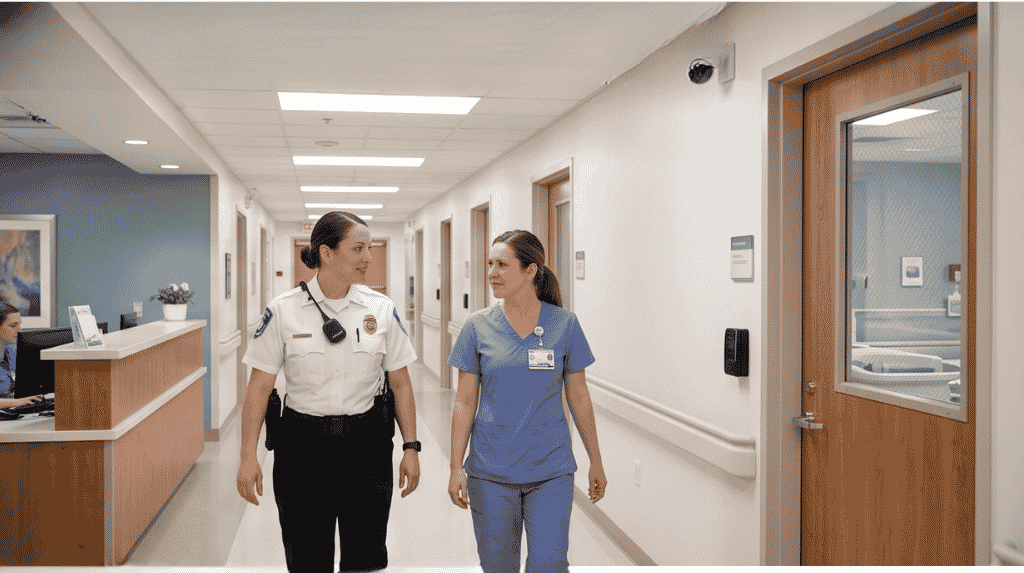
Set access by role: nurse, doctor, technician, housekeeping, security. When someone changes ward or leaves, change the role and all their doors follow. Link shift times so that a card for the night team does not open the pharmacy at noon.
Emergency rules come first. Doors on escape routes must release when the fire alarm sounds, and staff need a quick way into locked rooms during a code event. Agree these behaviours with your safety officer and the local fire rules before you finalise the lock choices, and test them regularly.
Pharmacy, labs and records rooms
Medicines, samples and patient records need more than a card. Add a second factor, such as a PIN or fingerprint, for the rooms where theft or privacy loss would do most harm. Alert when a door is held open or forced, and review the entry log on a fixed schedule. A camera view of the doorway, kept to what policy allows, helps explain any odd entry later.

Planning hospital access control with Suraj Informatics
Suraj Informatics provides access control systems with zoned doors, role-based cards, alerts and logs for institutional buildings. Share your floor plans and the rooms you need to protect, and we will suggest a layout that keeps care moving. Our guide to industrial access control shows how the same ideas apply to other large sites.
Access control in hospitals: common questions
Will access control slow down clinical staff?
Not if roles and zones are set well. Staff badge and enter, and the door opens in a moment.
What happens during a fire?
Escape-route doors must release as the fire rules require. Design and test this with your safety officer.
Can the same cards open parking and canteen?
Yes. One card can serve doors, parking and other services when the system is set up that way.
How do we protect patient records rooms?
Use role-based access, a second factor for sensitive rooms and regular log reviews.
Talk to our access control team
Tell us about your building, wards and sensitive rooms, and we will suggest a zone and role plan.