



During 2020, many organisations in India and elsewhere began using thermal cameras to screen people for high body temperature at entrances. A fever screening solution is a first filter, not a medical test. This article explains how such a system works, where it was used and what its limits are.
Key takeaways
- Thermal screening measures skin surface temperature, not illness.
- It flags people for a follow-up check with a clinical thermometer.
- Results depend on setup, distance, environment and calibration.
- It is not a medical diagnosis and does not detect infection by itself.
How a thermal fever screening system works
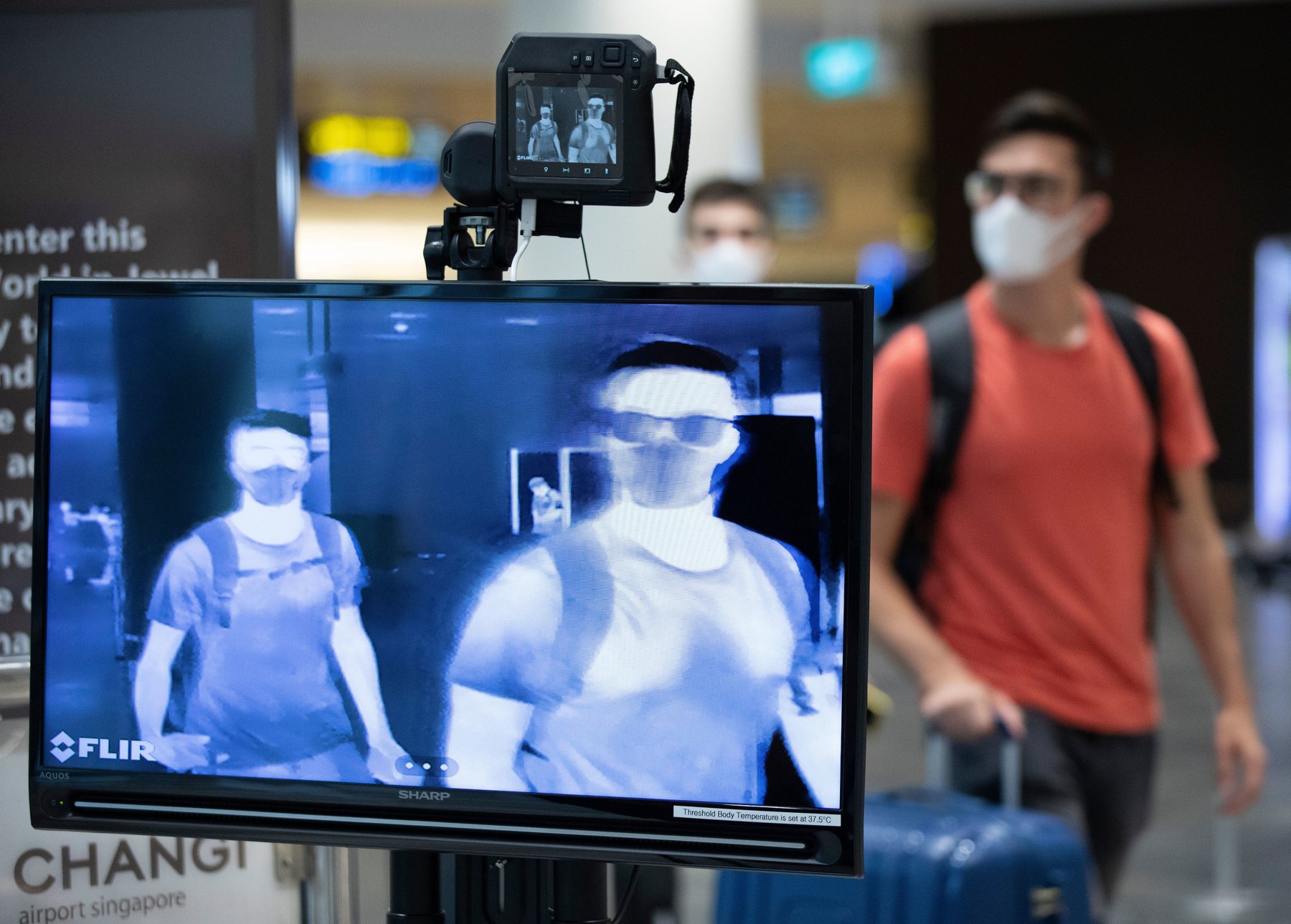
A thermal camera reads infrared heat from the face and shows it on a screen. Software compares the reading with a set threshold and flags people above it. Some systems combine a thermal sensor with a visible camera to find the face, and a reference source to keep readings steady. Our guide to how a thermal camera for fever detection works covers the technology in detail.
Where screening was used in 2020
Airports, hospitals, offices, factories and public buildings placed cameras at entrances so that large numbers of people could be checked without close contact. Health agencies in several countries also tested AI-based temperature screening tools. These were trials and deployments of the time, and their effectiveness varied with conditions.
What fever screening cannot do
Skin temperature is not the same as body temperature. Heat, sun, exercise, recent hot drinks and a cold room can all change a reading, and some people with an infection have no fever. A screening result therefore says only that a person should be checked again. It must never be used to diagnose illness, and health decisions belong to medical staff.
Setting up a screening point responsibly
- Choose a draught-free spot with steady indoor temperature.
- Fix the camera at the distance and height the supplier specifies.
- Calibrate and check the equipment as the supplier advises.
- Send flagged people to a second check with a clinical thermometer, away from the queue.
- Train staff to treat people with courtesy and follow health guidance.

Privacy and record keeping
Temperature data about a person is sensitive. Decide whether images or readings are stored at all, who can see them and how long they are kept, and tell visitors that screening is in use. For the full setup process see setting up a fever screening point.
Thermal screening options from Suraj Informatics
Suraj Informatics provides camera and analytics systems under its intelligent video surveillance offering, and can advise on thermal screening points as part of site safety planning. Contact us to discuss your entrance and your requirements.
Fever screening solutions: common questions
Does a thermal camera diagnose fever or infection?
No. It flags high skin temperature for a follow-up check by a clinical thermometer and trained staff.
Why can readings be wrong?
Environment, distance, sun, activity and equipment setup can all change the result.
Can people without a fever carry an infection?
Yes. Screening cannot detect every case, so it should be one measure among several.
Is stored temperature data private?
It should be treated as sensitive. Limit access and keep it only as long as needed.
Talk to our surveillance team
Tell us about your entrance and screening needs, and we will suggest a suitable camera setup.