


A weighbridge is often seen as “just a scale”, but the type you choose and how well it is installed and serviced decide how accurate it stays, and how much money it saves or loses. Small errors on every truck add up fast. This guide explains the main types of weighbridges, how they are used, and what good installation, maintenance and service involve.
Key takeaways
- Weighbridges weigh trucks loaded and empty to calculate the weight of the material carried.
- Main types are pit, pitless, portable, RCC, mechanical and rail weighbridges.
- Regular calibration, inspection and cleaning keep weights accurate and legal.
- Automation can be added to most existing weighbridges to cut errors and manual work.
Types of weighbridges

| Type | Description | Typical use |
|---|---|---|
| Pit weighbridge | Platform set level with the ground in a pit | Sites with limited space |
| Pitless (surface-mounted) | Platform above ground with ramps | Easy cleaning and drainage |
| Portable weighbridge | Modular platform that can be moved | Temporary sites, mines, projects |
| RCC weighbridge | Reinforced concrete deck on load cells | Heavy-duty, long-life installations |
| Mechanical weighbridge | Lever-based, older design | Legacy sites being upgraded |
| Rail weighbridge | Weighs wagons on track | Rail sidings and terminals |
How a weighbridge is used
A truck is weighed twice: once loaded and once empty. The difference is the net weight of the material. This is used for billing, stock control and checking that vehicles stay within legal limits. Weighbridges are widely used in mining and quarries, steel and metals, cement, chemicals, powder and liquid industries, and by authorities checking vehicle weights.
Getting installation right
- Choose the type. Match pit, pitless or portable design to space, traffic and drainage.
- Prepare the foundation. A level, strong foundation is essential for accurate readings.
- Install load cells and indicator. Fit, wire and protect them from water and damage.
- Calibrate and certify. Test with known weights and complete legal certification.
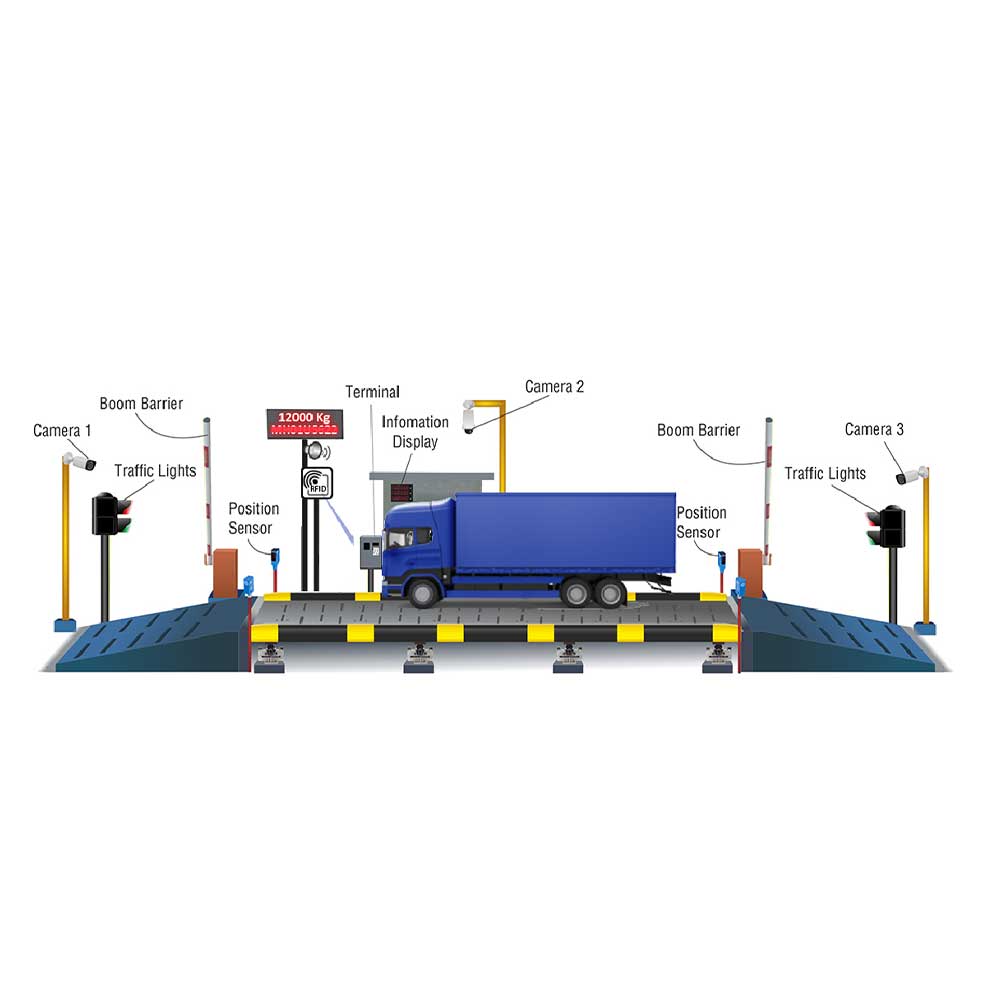
- Plan the traffic flow. Set entry and exit paths, signals and barriers.
Maintenance and service

- Calibration: recalibrate at regular intervals and after any repair.
- Cleaning: keep debris and mud away from the platform gaps and load cells.
- Inspection: check load cells, cables, junction boxes and earthing.
- Indicator and software: check readings, backups and connections.
- Records: keep a service log for audits.
To learn more about how weighbridges and their software work, see our weighbridge software guide and our overview of weighbridge systems.
Weighbridge installation and service support
Suraj Informatics adds automation to new and existing weighbridges with the unmanned weighbridge system: RFID or ANPR identification, cameras, barriers, position sensors and ERP-linked software. Automation does not replace legal calibration and certification of the weighbridge.
Weighbridge types and service: common questions
What are the main types of weighbridge?
Pit, pitless (surface-mounted), portable, RCC, mechanical and rail weighbridges.
How often should a weighbridge be calibrated?
As required by local legal metrology rules, and after any major repair or component change.
Can an old weighbridge be automated?
Usually yes. Identification, sensors, barriers and software can be added around the existing platform and indicator.
Why is a weighbridge weighed twice?
Once loaded and once empty, so the difference gives the net weight of the material.
Talk to our weighbridge team
Tell us about your weighbridge, site and truck volumes, and we will suggest how to automate it.