
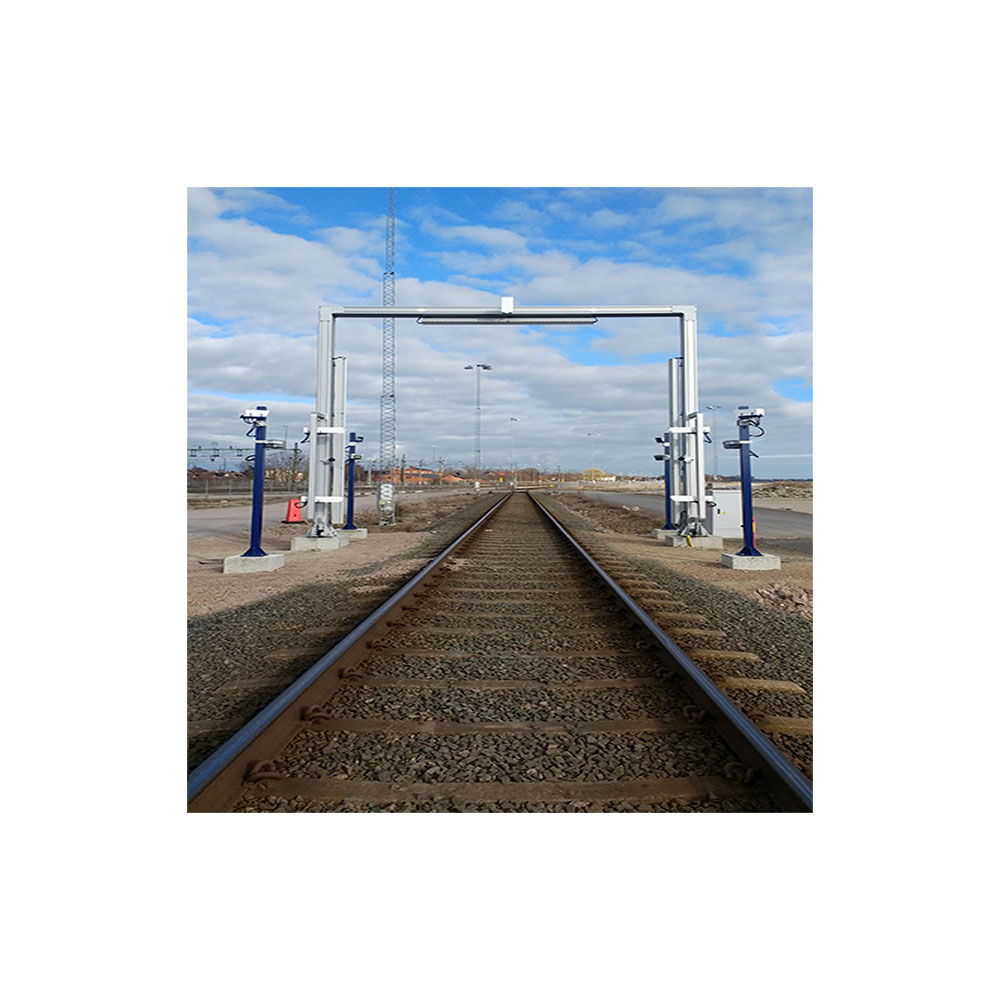

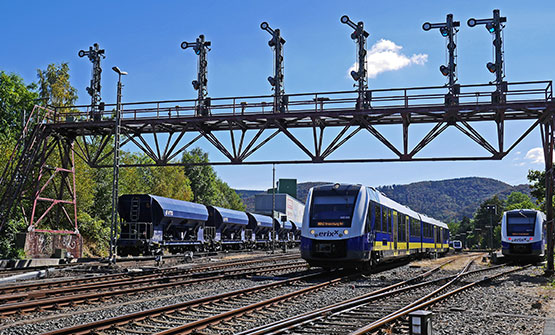
A railway OCR portal is the physical gateway that reads every wagon and container on a passing train. Choosing and installing one involves more than cameras: the structure, lighting, trackside readers, software and integration all decide how well it works. This guide explains what is inside a rail OCR portal, what to check when choosing one and how it is installed.
Key takeaways
- A rail OCR portal combines a structure, cameras, lighting, readers and software.
- Placement, train speed and lighting have a big effect on read accuracy.
- Software verifies data before it is sent to the terminal or rail system.
- A single supplier for hardware, software and integration keeps the project simple.
What is inside a railway OCR portal
| Component | Purpose |
|---|---|
| Portal structure | Holds cameras and lights in the right positions over and beside the track |
| High-resolution cameras | Capture wagon sides, tops and container markings |
| Lighting | Gives clear images by day and night |
| Trackside AEI readers and sensors | Detect the train, read wagon tags and measure speed |
| OCR software | Reads numbers and codes and verifies them |
| Integration layer | Sends data and images to the TOS, rail or ERP system |
What to check when choosing a rail OCR portal
- Train speed and traffic. Check the maximum speed and number of trains per day the portal must handle.
- What must be read. Wagon numbers, container numbers, ISO codes, hazard labels, seals.
- Site conditions. Space, power, weather, dust and lighting at the chosen location.
- Accuracy and verification. How the software checks and corrects reads, and how exceptions are handled.
- Integration. Which systems need the data and in what format.
How a rail OCR portal is installed
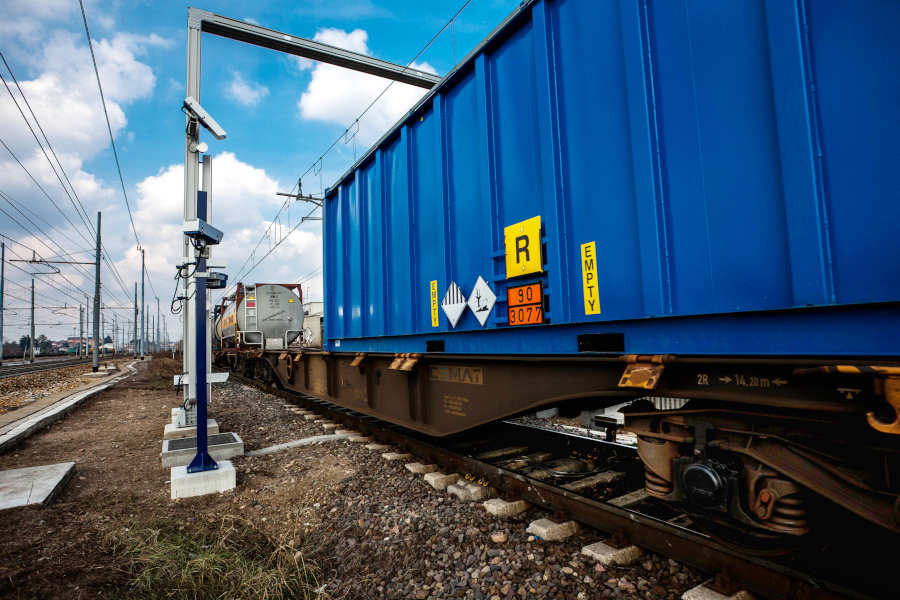
Installation usually includes a site survey, civil work for foundations and cabling, mounting the structure, cameras and lights, connecting trackside readers, and configuring the software. The system is then tested with real train passages and tuned before going live.
Where rail OCR portals are installed
- Port rail terminals at the entry and exit tracks.
- Inland container depots and dry ports receiving container trains.
- Rail freight yards where trains are checked.
- Plant sidings for raw materials and finished goods.
See also intermodal rail OCR and how rail OCR works.
Your one-stop rail OCR partner
Suraj Informatics is a one-stop provider of the railway train OCR portal, covering design, hardware, software, installation, integration and support for ports, ICDs and rail sidings.
Railway OCR portals: common questions
What does a railway OCR portal include?
A structure, cameras, lighting, trackside readers, OCR software and integration with your systems.
Can the portal read trains at speed?
Yes, within the speed range it is designed and configured for.
Does it need a lot of space?
It needs room for the frame or masts beside and over the track, plus power and network connections.
Who maintains the portal?
Maintenance is usually provided by the supplier under a support agreement.
Talk to our rail automation team
Tell us about your track layout and train traffic, and we will suggest the right portal design.